
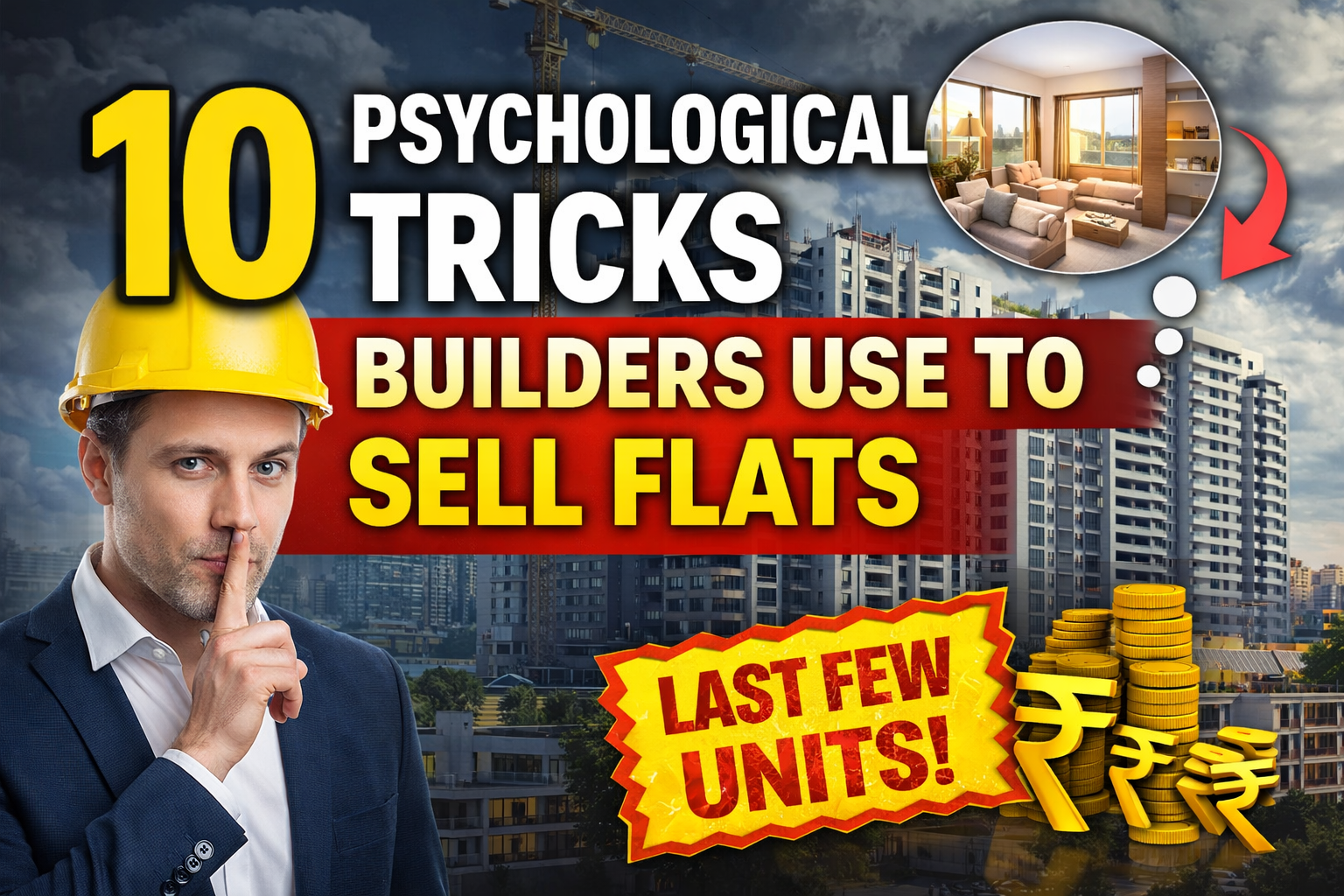
Buying a home is one of the biggest financial decisions of your life. However, many buyers do not realize that real estate developers do not just sell apartments; they sell dreams, emotions, and psychology. Many marketing strategies used by builders are designed to influence your decisions before you even notice what is happening. If you are planning to buy a home, understanding these tricks can help you make smarter decisions and avoid expensive mistakes.
The following are 10 psychological marketing tactics builders commonly use to attract buyers:
1. The Last Few Units Left Urgency Trick
Imagine visiting a project and the salesperson tells you that only 4 flats are left in the tower. Suddenly the pressure increases. You start thinking about whether prices will increase tomorrow or if someone else will book the unit. This tactic uses scarcity psychology. When something appears limited, our brain assumes it must be valuable. In reality, inventory is often much larger than what is claimed.
2. The Luxury Entrance Illusion
Developers often ensure the entrance gate and lobby look extremely luxurious because they know the first impression creates a halo effect. If the entrance feels premium, buyers subconsciously assume the construction quality is premium, the apartments are high-end, and the project value is higher, even if the actual flats are relatively standard.
3. The Perfect Sample Flat Illusion
Sample flats are designed to create a visual illusion. Design tricks include smaller furniture, wall mirrors, bright lighting, and customized wardrobes. All these tricks make rooms appear bigger than they actually are. Once possession happens, many buyers feel the flat is smaller than the sample flat. Technically the builder never lied they simply framed the space differently.
4. Selling the Future
Many projects advertise upcoming infrastructure like a metro, proposed airport, future highway, or business hub. These developments may take 10-20 years or sometimes never happen. However, buyers imagine huge appreciation. This uses optimism bias, where people naturally believe the future will be better.
5. The Everyone Is Buying Social Proof Trick
Sales teams often mention that doctors, NRIs, or specific groups have booked many units, or that a specific tower is already sold out. This triggers social proof psychology. When people believe others are buying, they feel safer buying too. It reduces the fear of making a wrong decision.
6. The Pre-Launch Price Anchor
Builders often promote a pre-launch price of ₹80 lakh against a future price after launch of ₹1 crore. Your brain immediately calculates a saving of ₹20 lakh. This is called anchoring bias. The first number you see becomes your reference point, even if the higher price never actually becomes real.
7. Selling the Lifestyle Dream
Real estate ads rarely show traffic, construction dust, or crowded surroundings. Instead, you see green gardens, happy families, peaceful balconies, and children playing. This creates an emotional story. Buyers start imagining their family living this lifestyle. This emotional vision often becomes more powerful than logic.
8. The 50+ Amenities Strategy
Many projects advertise 40, 60, or 80 lifestyle features. In reality, most residents use only the gym, clubhouse, and garden. Still, the long list creates perceived value. Buyers feel the project offers more for the same price, even if most amenities are rarely used.
9. The EMI Affordability Trick
Instead of showing the total price, developers highlight monthly costs, such as owning a home for just ₹42,000 per month. This shifts focus away from the total property cost, interest paid, and maintenance charges. Your brain evaluates monthly affordability rather than total spending.
10. The Prestige Address Effect
Developers choose project names like Royal Heights, Skyline Elite, Imperial Towers, or Grand Residency to trigger status psychology. Owning such an address feels like a social upgrade. Homes are not just shelters, they are also symbols of success and identity.
Why These Strategies Work So Well?
Buying a home is not purely logical. It is influenced by the fear of missing opportunity, desire for status, family security, and future investment hopes. Builders understand this psychology well, so their marketing focuses on emotion first and logic later.
Smart Advice for Home Buyers:Before buying a home, always check the following:
- Carpet area
- Builder track record
- Construction quality
- Legal approvals
- RERA registration
- Future maintenance cost
A home should be chosen based on facts rather than marketing stories.