
Many houses in India develop cracks within just a few years of construction. Homeowners often blame the contractor or workmanship. But in many cases, the real problem is simpler: the wrong type of cement was used during construction.
Most home buyers focus on cement brands like UltraTech, ACC, or Ambuja. But civil engineers usually look at something else first: the type of cement and where it will be used in the building. In concrete construction, cement is selected based on strength requirements, heat generation, and environmental conditions.
Using the wrong cement can cause:
- cracks in walls
- weak brick bonding
- corrosion of reinforcement
- shorter building life
The Three Main Types of Cement Used in Houses
1.OPC (Ordinary Portland Cement)
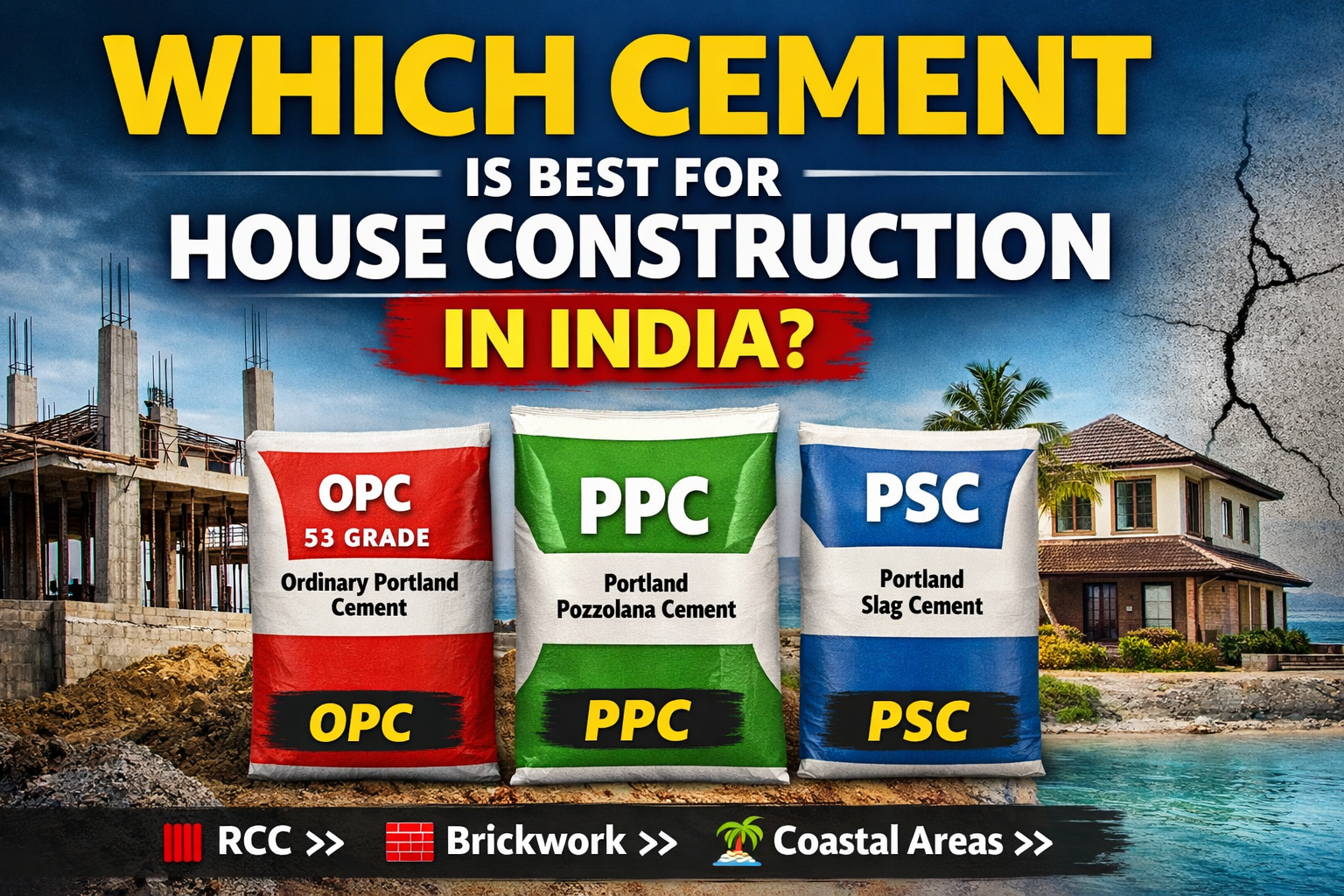
OPC 53 grade is commonly used for RCC structural work, such as foundations, columns, beams, and slabs. Engineers prefer OPC for structural members because it gains strength quickly and handles heavy loads effectively.
2.PPC (Portland Pozzolana Cement)
PPC is widely used for brickwork and plastering. Its advantages include producing less heat during hydration, reducing the chances of wall cracks, and providing better workability for masons. That is why PPC is commonly used for non-structural work in houses.
3.PSC (Portland Slag Cement)
PSC performs better in coastal and humid environments. It is often recommended in cities such as Navi Mumbai, Chennai, Kochi, and Goa. PSC provides better resistance against salt attack, moisture, and reinforcement corrosion. This helps increase the long-term durability of the structure.
OPC vs PPC vs PSC: A Simple Rule Engineers Follow
Instead of asking “Which cement brand is best?”, ask: “Which cement type is best for this stage of construction?”
Construction Work: Recommended Cement
RCC Structure: OPC 53
Brickwork: PPC
Plastering: PPC
Coastal Construction: PSC
One Insight Most Homeowners Miss
Many people think stronger cement automatically means stronger concrete. But in practice, the water-cement ratio is even more important than the cement brand. Adding excess water during mixing can reduce concrete strength significantly. Strong concrete depends on the correct cement type, proper mix proportion, and proper curing.
Quick Cement Quality Check
Before cement is used on site, check these three things:
- Manufacturing Date: Avoid cement older than 3 months.
- Lump Test: Cement should feel smooth without hard lumps.
- ISI Mark: Always check for the ISI certification on the bag.
Builders often debate cement brands. But experienced engineers know the real truth: the strongest houses are not built with the most famous cement brand they are built with the right cement used in the right place. Combine the right cement with proper mixing and curing, and your house can remain strong and durable for decades.