
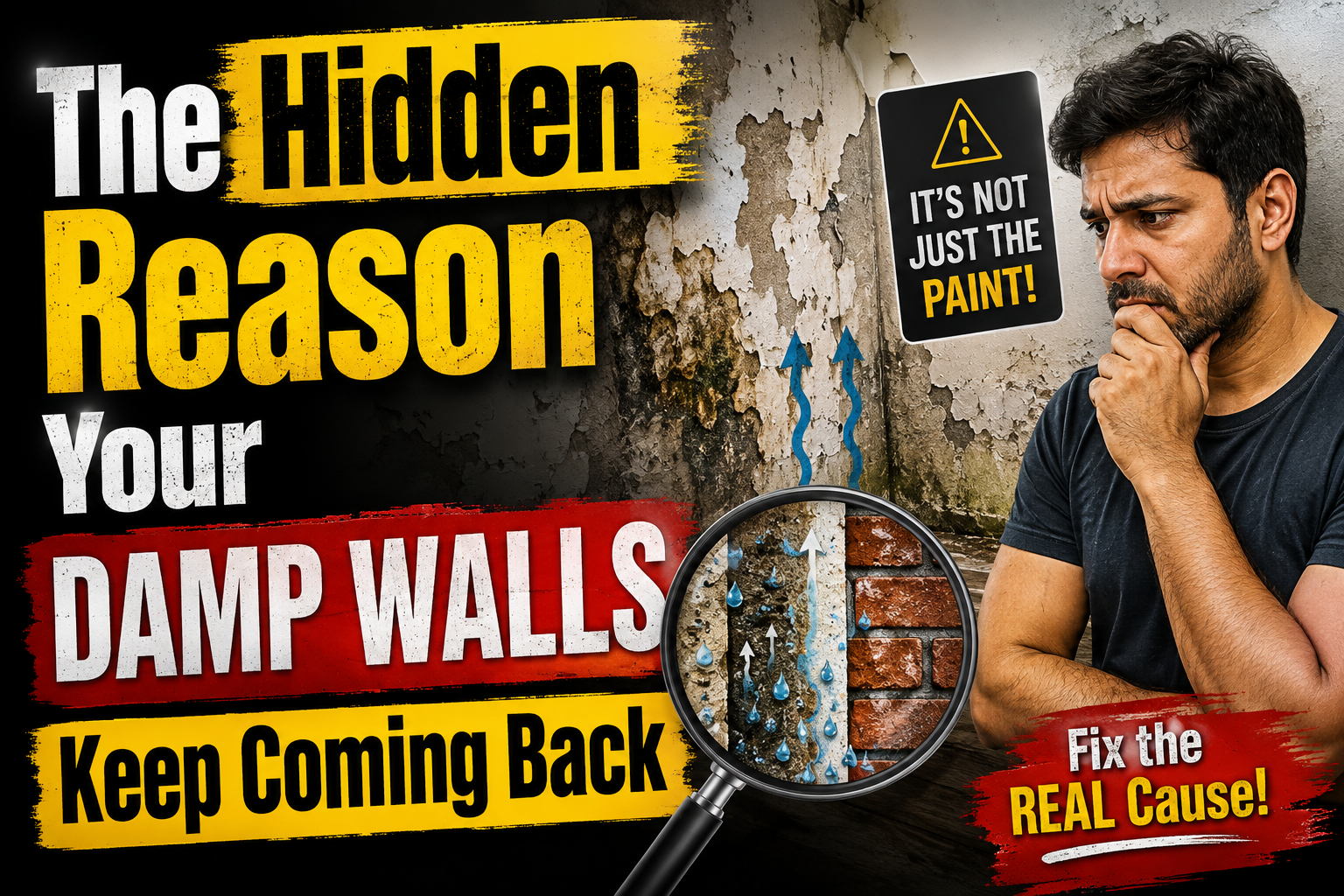
You painted over that damp patch last year. Maybe twice. And here it is again creeping back the moment the rains ease off, the paint bubbling, the plaster gone soft and chalky under your fingers.
You’re not imagining it. And you’re not doing anything wrong by trying to fix it yourself. The real problem is that most of what gets sold to you as a “damp-proofing solution” was never built to solve anything. It was built to hide the problem for a season.
That’s the part nobody tells you when you’re standing in a hardware shop holding a tin of waterproof paint, wondering if this time it’ll actually work.
Meanwhile the damp keeps doing its quiet work behind the wall the plaster loses its grip, the steel underneath starts rusting, and by the time the crack shows up, the fix has gotten a lot more expensive than it needed to be.
Here’s the truth: dampness isn’t a paint problem. It’s a water-entry problem. And until you know the difference between a temporary patch and a permanent fix, you’ll keep spending money on the same wall, year after year, monsoon after monsoon.
Let’s fix that today.
Quick Fixes Vs Permanent Fixes Know Which One You’re Buying
Every damp-proofing product on the market falls into one of two buckets: things that buy you time, and things that solve the actual problem. Contractors rarely explain which bucket you’re in, because the time-buying option is cheaper, faster, and a lot easier to sell you.
Here’s how to tell them apart and which one your wall actually needs.
The “Quick Fixes” That Only Delay The Damage
These treatments create a barrier on the surface. They don’t touch what’s happening inside your wall, so the moisture is still there just trapped a little longer before it finds its way back out.
- Bituminous painting – a hot bitumen coat, or a cold emulsion if hot application isn’t practical, that seals the surface fast, but leaves a dark, tar-like finish most homeowners find impossible to live with indoors.
- Cement wash – a thin cement-and-water mix with an adhesive gum, brushed on in one or two coats. Cheap and quick, but it wears off within a season or two of monsoon battering.
- Waterproofing solutions – the tins and pouches sold in every hardware store, painted on exactly as the manufacturer prescribes. They work, for a while, right up until the moisture underneath finds a new way through.
Think of these like an umbrella with a small hole in it. It keeps most of the rain off you for a while right up until the one downpour that finds the gap.
None of these are wrong to use. They’re genuinely useful while you plan the real fix, or on a wall where a full repair isn’t possible right now. The mistake is treating them as the fix.
What Actually Stops Dampness For Good
Permanent protection means finding out exactly where the water is getting in, and closing that door instead of just painting over it.
If your wall material itself is porous – soaking up moisture like a sponge the fix is to strip the old plaster, rake out the masonry joints to a depth of 20 mm, and apply a fresh 20 mm layer of cement mortar (1:4 mix) blended with a water-proofing compound. This rebuilds the wall’s outer skin instead of just coating it.
If your plaster is crumbling and leaving white, gritty patches, the sand used to make it was probably unwashed and full of salts. There’s no painting your way out of this one. The affected plaster has to come off completely and get replaced with fresh rendering made from salt-free sand.
If the damp patch tracks a pipe route or a mortar line, you’re not looking at a porous-wall problem at all you’re looking at a leak. Leaking pipes need re-caulking or replacement. Poorly laid mortar joints need the plaster removed, the joints raked 20 mm deep, and fresh plastering done properly this time.
If the dampness is climbing up from the floor rather than spreading from a patch, your damp proof course (DPC) has failed, or your building never had one at plinth level to begin with. A new DPC has to go in before anything else you do will hold.
Notice something? Every one of these fixes starts with a diagnosis, not a product. That’s the entire difference between a mason who’s actually solving your problem and one who’s just selling you another tin of paint.
Three Damp Problems That Look The Same But Aren’t
Not every damp wall has the same root cause, and treating the wrong one the wrong way just wastes your money twice over.
- Condensation shows up on hard, non-porous surfaces, usually in bathrooms or kitchens with poor airflow. Lime plaster helps here because it’s warmer and more porous than cement, and a finishing coat of absorbent plaster does the same job. Flat, matte paint also breathes better than glazed paint, which is exactly why glossy bathroom walls sweat the way they do.
- Efflorescence – those chalky white patches means salts are migrating to the surface as moisture evaporates. Stop the moisture source first, let the wall dry out fully, then wash it down with tamarind water. The organic tartaric acid in it lifts the salt residue. Rinse with clean water, then replaster using a mortar with a water-proofing compound mixed in.
- Vegetation growth the little plants sprouting from your parapet or sunshade cracks needs the roots uprooted, followed by a copper sulphate solution or acid treatment to stop regrowth. Then seal every crack you can find, or you’ll be pulling the same weed out again next monsoon.
Why This Actually Matters To You
Here’s the part that should bother you: every year you paint over a damp wall instead of fixing it, you’re not saving money. You’re renting a temporary fix, on repeat, for as long as you live in that house. The paint job costs less today. But the plaster keeps falling off, the steel underneath starts corroding quietly behind it, and the repair bill five years from now costs far more than the DPC or the replastering job would have cost right now.
Think about it in real terms: a proper DPC insertion or a 20 mm re-plastering job is a one-time cost. A repaint every year, for ten years, adds up to more money spent on a wall that was never actually fixed and that’s before you count what happens if the corroding steel behind it turns into a structural repair.
Your walls are trying to tell you something every monsoon. The question is whether you’re listening to the diagnosis, or just reaching for another tin of paint.
Do This Before The Next Monsoon Hits
Walk around your home today and note exactly how each damp patch behaves. Does it rise from the floor? Track a pipe line? Show up only on smooth bathroom tiles? Spread from crumbling, salty plaster? Match what you find to the right permanent fix above, and get a civil engineer to confirm the diagnosis before you hire anyone to “waterproof” it. That one hour of checking today will save you a repaint every single year.