
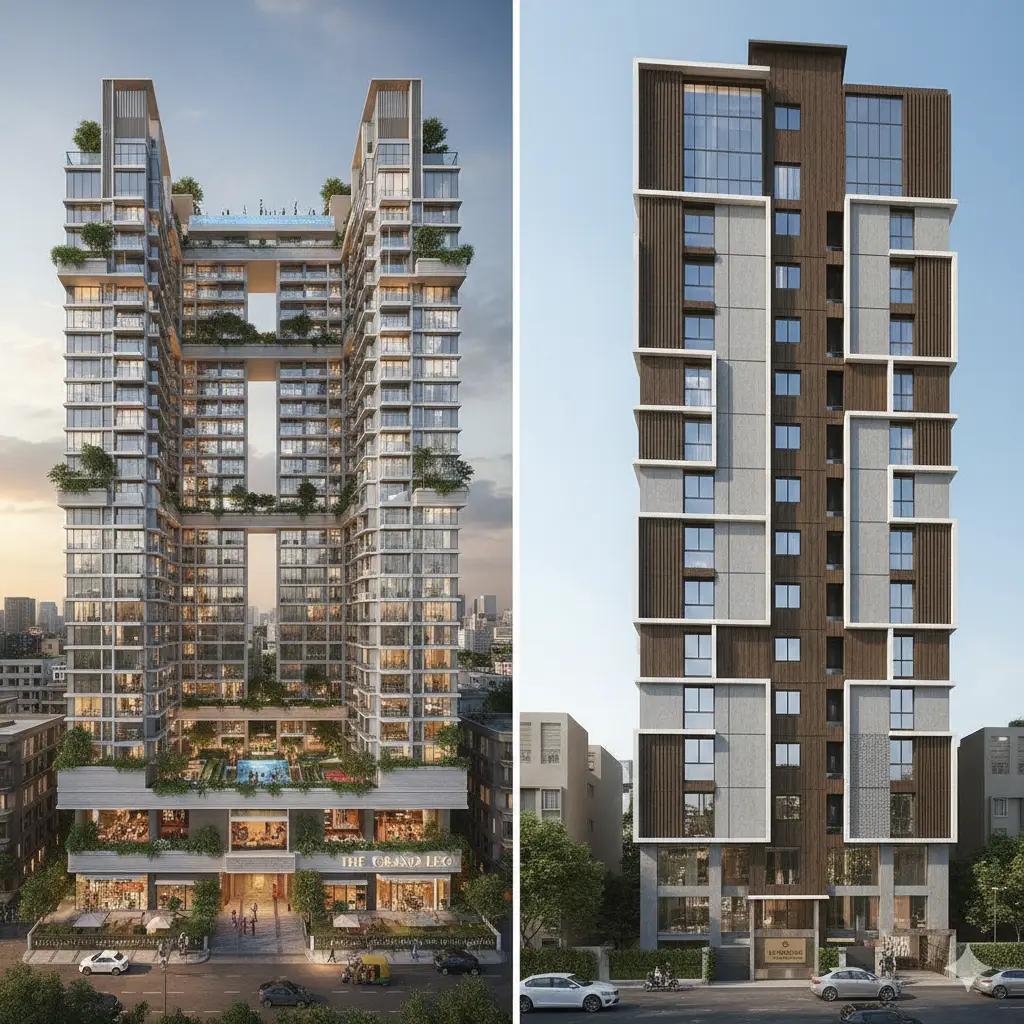
I’m a civil engineer, and I see this question all the time from first-time buyers:
“High-rise with amenities or a simple building with nothing fancy?”
Most people already want the high-rise. The pool. The gym. The clubhouse. The lifestyle pitch.
So let me tell you how this looks from the engineering side, not from a brochure. When we look at a building, we don’t see luxury first. We see systems.
A high-rise with amenities isn’t just a taller version of a normal building. It’s a stack of dependencies. 1.Lifts. 2.Fire systems. 3.Pumps. 4.Pressure plumbing. 5.Power backup. 6.STP. 7.Access control. 8.Facility management.
All of this works beautifully at the beginning. But none of it stays “new”. And the moment even one system starts giving trouble, daily life gets affected. Anyone who has lived in an older high-rise knows what I’m talking about.
Here’s the part first-time buyers usually underestimate. Maintenance doesn’t stay where it starts.
In the first year: “Sir, maintenance is very reasonable.” Five years later: Lift repairs. Pump replacements. Waterproofing issues. Staff costs. Electricity costs. And suddenly the monthly outflow feels heavier than expected.
As an engineer, I can tell you this honestly: More amenities = more things that will eventually need fixing. That’s not negativity. That’s lifecycle reality.
Simple buildings don’t look impressive. They don’t sell “lifestyle”. 1.But they age quietly. 2.Fewer systems. 3.Fewer breakdowns. 4.Lower running costs. 5.Less dependence on vendors. If something goes wrong, it’s usually simpler and cheaper to fix.
For a first home, that matters more than people admit. Another uncomfortable truth: most amenities are underused.
People are excited in the beginning. 1.Gym every morning. 2.Pool on weekends.
Then life happens. 1.Work. 2.Kids. 3.Health. 4.Time.
But the maintenance bill keeps coming, whether you use the pool or not.
The mistake I see first-time buyers make is this:
They buy the most complex option as their first step. When really, your first home should be forgiving. 1.Forgiving if income changes. 2.Forgiving if expenses increase. 3.Forgiving if you want to sell or rent later.
Simple buildings are more forgiving. High-rises are not. That doesn’t mean high-rises are bad. They make sense if:
you’re financially comfortable the building is already functioning well the builder quality is proven you plan to stay long term you’re okay with rising maintenance