
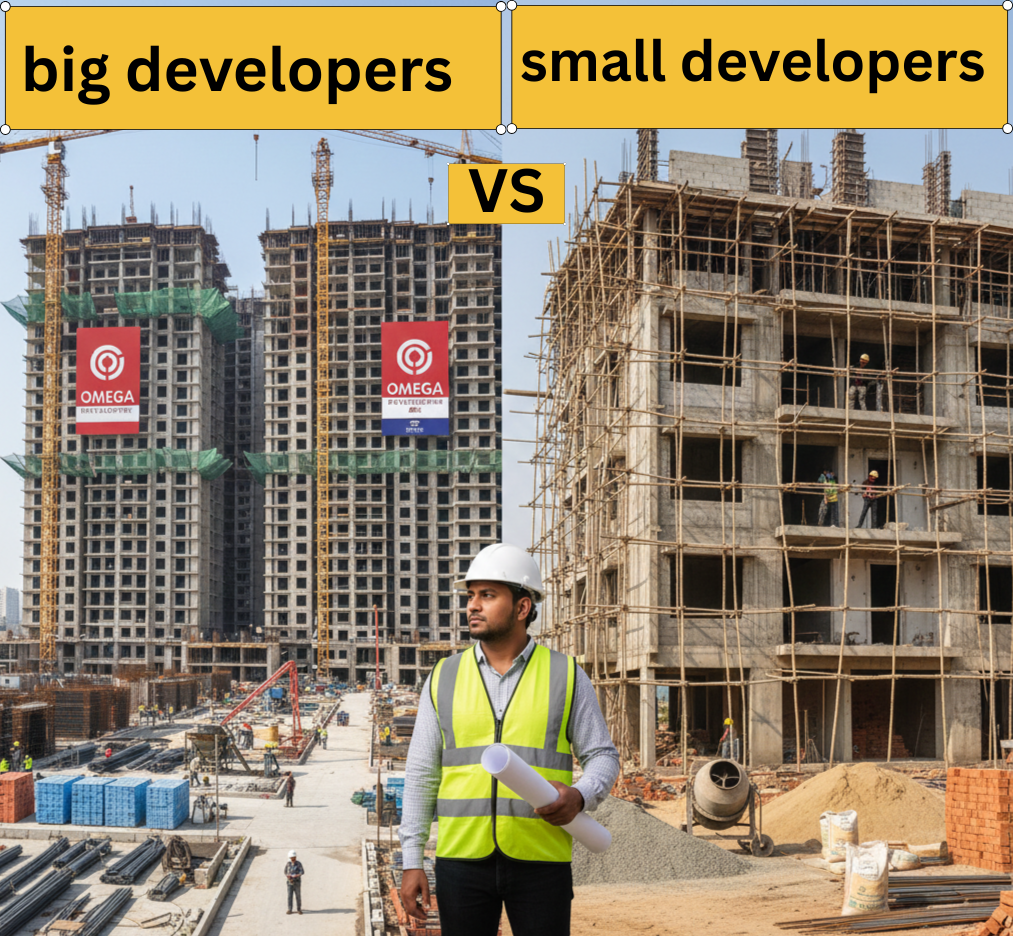
If you think buying from a famous builder makes your home safe, read this first. The truth is simple: both big developers and small builders involve risk. If you don’t understand this before booking, you may regret it for years.
Why buyers feel safe with famous builders
When you see a big brand project, you feel confident. You assume documentation will be proper, rules will be followed, engineers will be qualified, and funding will be secure. Honestly, most of the time, this is true. Big builders usually have strong civil engineering teams, large contractors, and structured processes. Funding is rarely an issue because their brand alone attracts bookings. Even construction quality is often better than small builders.
The hidden reality on sites
Construction quality doesn’t depend only on the builder it also depends heavily on location. I have personally seen situations where a reputed builder wanted to maintain quality, but local political pressure forced them to buy materials only from specific suppliers. If they refused:
- outside cement trucks were blocked
- sand supply was stopped
- work got delayed
When deadlines are tight, builders sometimes have no option but to use poor-quality materials just to keep construction moving. Buyers never see this part.
Brand name does not guarantee safety
Many buyers think that because it is a big builder, there is no reason for concern. However, history shows something else. We have seen issues with well-known developers like:
- Kalpataru Radiance (Goregaon complaints)
- Nirmal Lifestyle
- Amrapali Group
- Unitech
- Jaypee Infra
All were reputed names once, yet thousands of buyers faced delays, legal fights, or losses. Real estate is unpredictable. A builder considered safe today can be in trouble tomorrow. Never trust a builder blindly just because they are famous.
About Small builders
Small builders are risky, but not always bad. Their advantages include faster decision-making, smaller teams, and sometimes quicker completion with decent or even good quality. In some areas, they face less supplier pressure than large developers. Sometimes a locally dominant builder delivers faster projects because he controls labor, supply, and approvals in that area through strong political ties.
but Choosing the wrong small builder is dangerous
If the builder is too small or inexperienced, documentation may be weak, profit focus may reduce quality, fraud risk increases, and the project may stop midway. Blindly choosing a cheap local builder can be worse than choosing a bad big builder.
What buyers should actually do
Don’t select a builder based on brand name, price, marketing office, or sample flats. Instead:
- track recent projects
- visit sites physically
- talk to residents
- check completion history
- verify approvals
In real estate, your safety comes from verification, not reputation.