
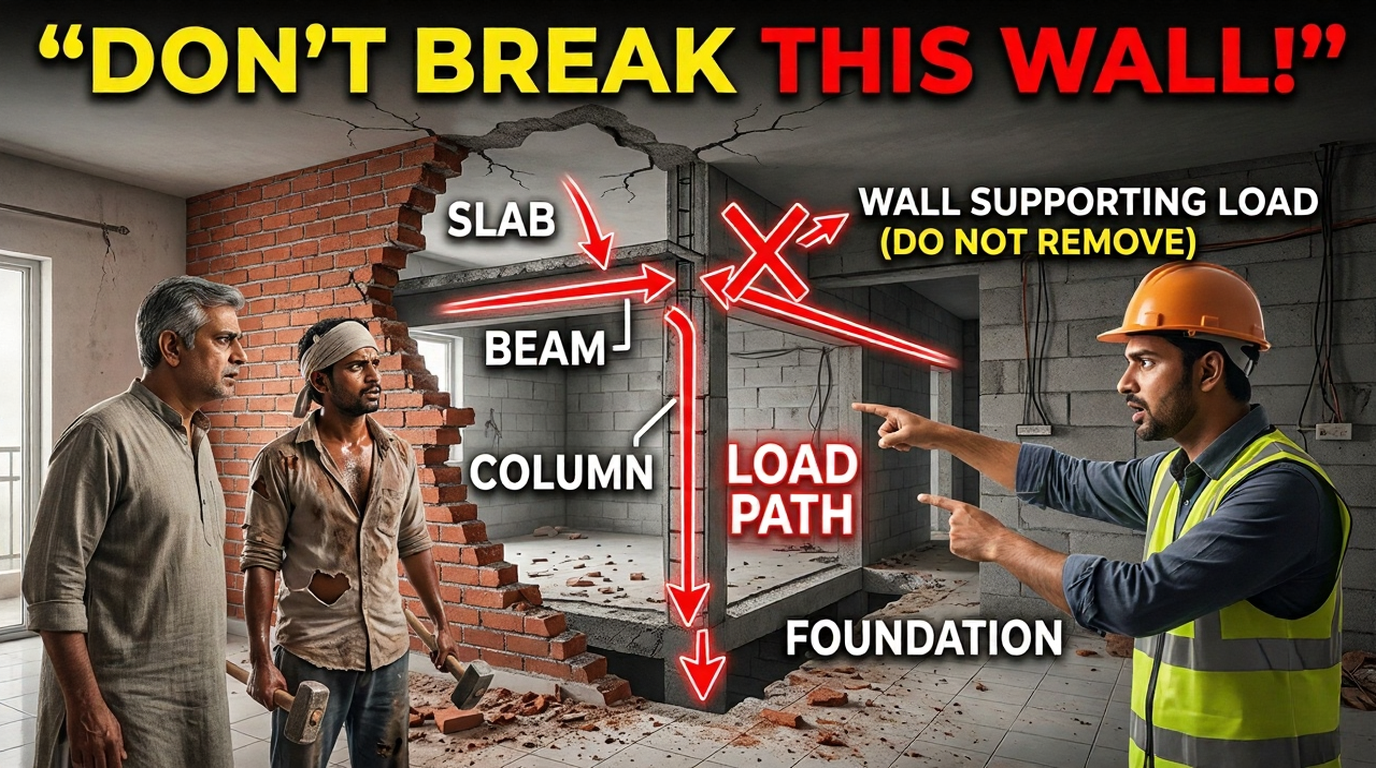
Removing a wall in your flat may seem like a simple interior upgrade. It can create open kitchens, larger living rooms, or modern layouts. But in some cases, that small change can quietly affect the structural behavior of the entire building. Many homeowners remove walls assuming they are just partition walls, without understanding how the building structure works.
The Common Mistake:Most people believe that walls inside a flat are non-structural. While some walls are only partitions, others may support the slab above them or influence how loads are distributed in the building structure. When such walls are removed without proper evaluation, the building’s load transfer system can be disturbed.
How Loads Actually Travel in a Building:In structural engineering, loads move through a chain called the load path. Typically, the load travels like this:
Wall -> Slab -> Beam -> Column -> Foundation
Each structural element transfers the load to the next. If a wall supporting the slab is removed, this load path may be altered, which can affect how forces move through the structure. Problems May Appear Slowly
Structural issues rarely appear immediately. Over time, buildings may start showing warning signs such as:
- Cracks in walls or ceilings
- Slight sagging of slabs
- Doors and windows becoming misaligned
Engineers sometimes observe these problems in buildings where structural walls were modified during interior renovation.
What Building Codes Say
According to the National Building Code (NBC) of India, structural elements of a building should not be altered without proper engineering evaluation and approval. Structural components such as load-bearing walls, beams, columns, and slabs are part of the building’s structural stability system. Unauthorized changes can compromise structural safety. How Engineers Identify Structural Walls
NBC:Natinal building code 2016
Before removing any wall, engineers check the structural drawings of the building. These drawings show:
- Column locations
- Beam layout
- Slab design
- Load-supporting elements
By reviewing these drawings, engineers can determine whether a wall is a partition wall, a load-supporting wall, or connected to the structural system. Without checking these drawings, removing a wall is essentially guessing with the building’s structure.
A Common Renovation Mistake:During renovation, homeowners often rely on interior designers, local contractors, and renovation workers. However, many of them do not have structural engineering training. Without proper structural evaluation, removing the wrong wall can affect how loads are distributed in the building.
Interior design can improve comfort and aesthetics, but structural safety must always come first. A wall that appears insignificant may actually be part of the building’s load transfer system. In structural engineering, even a small change in the load path can influence the behavior of the entire structure.