Your Builder Says the Plumbing Is “Standard”. Here Is What That Word Is Actually Hiding From You.
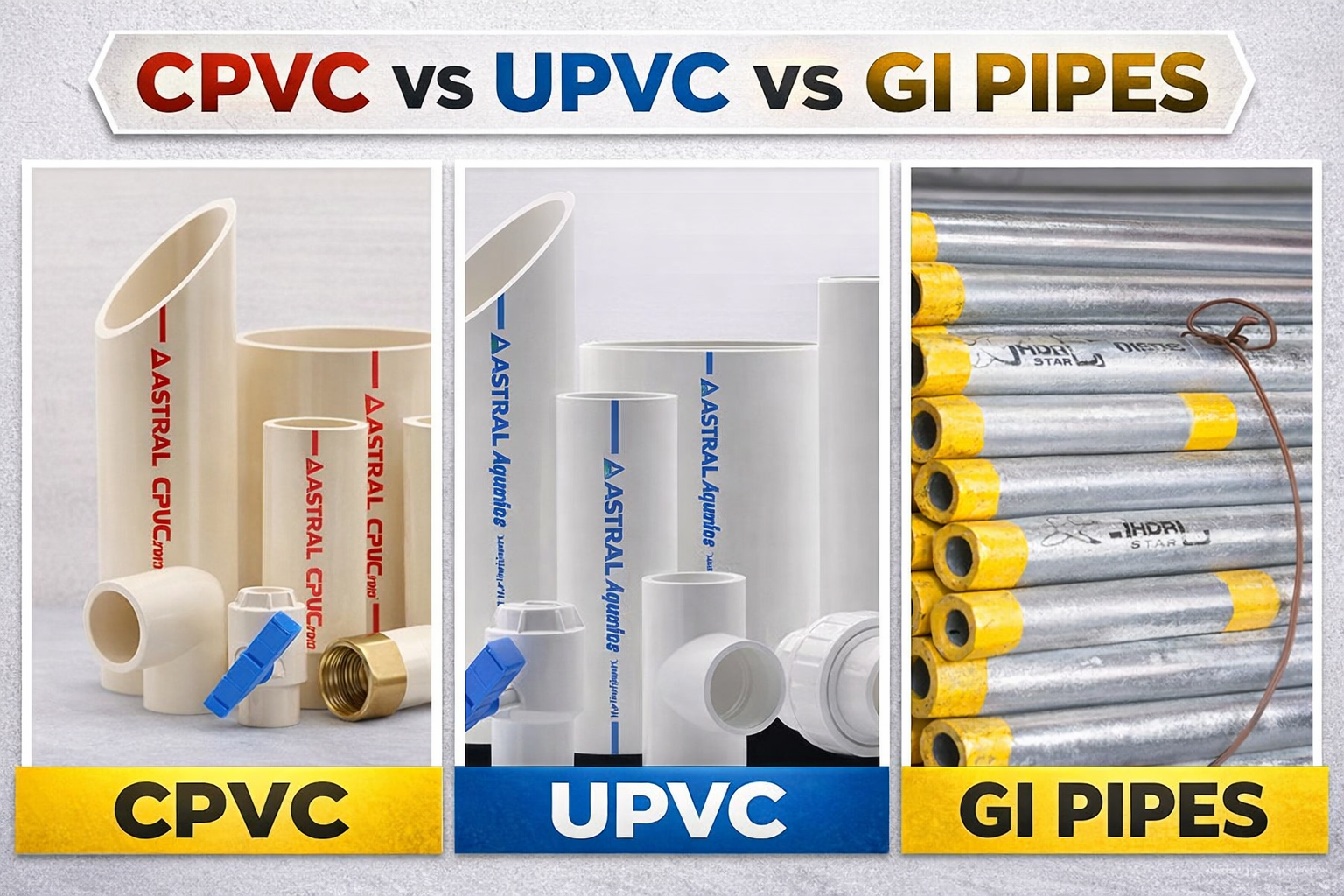
cpvc vc upvc vs gi pipe

CPVC, UPVC and GI pipes are not the same thing. One will serve your family for 50 years. One will rust inside your walls. Your builder may have already decided which one goes into your home without telling you. Did You Know? Most home buyers inspect tiles, check ceiling heights, and test light switches at … Read more

One Construction Decision That Affects Your Home for 30 Years

“Split comparison of red brick wall and AAC block wall showing heat vs cool home interior, illustrating how wall material affects home comfort and electricity bills.”

When people buy their first home, they focus on what they can see: location, layout, parking, and amenities. But one decision made during construction can affect your comfort for the next 30–40 years. And most buyers never think to ask about it: What material are the walls made of? It sounds like a small detail. … Read more

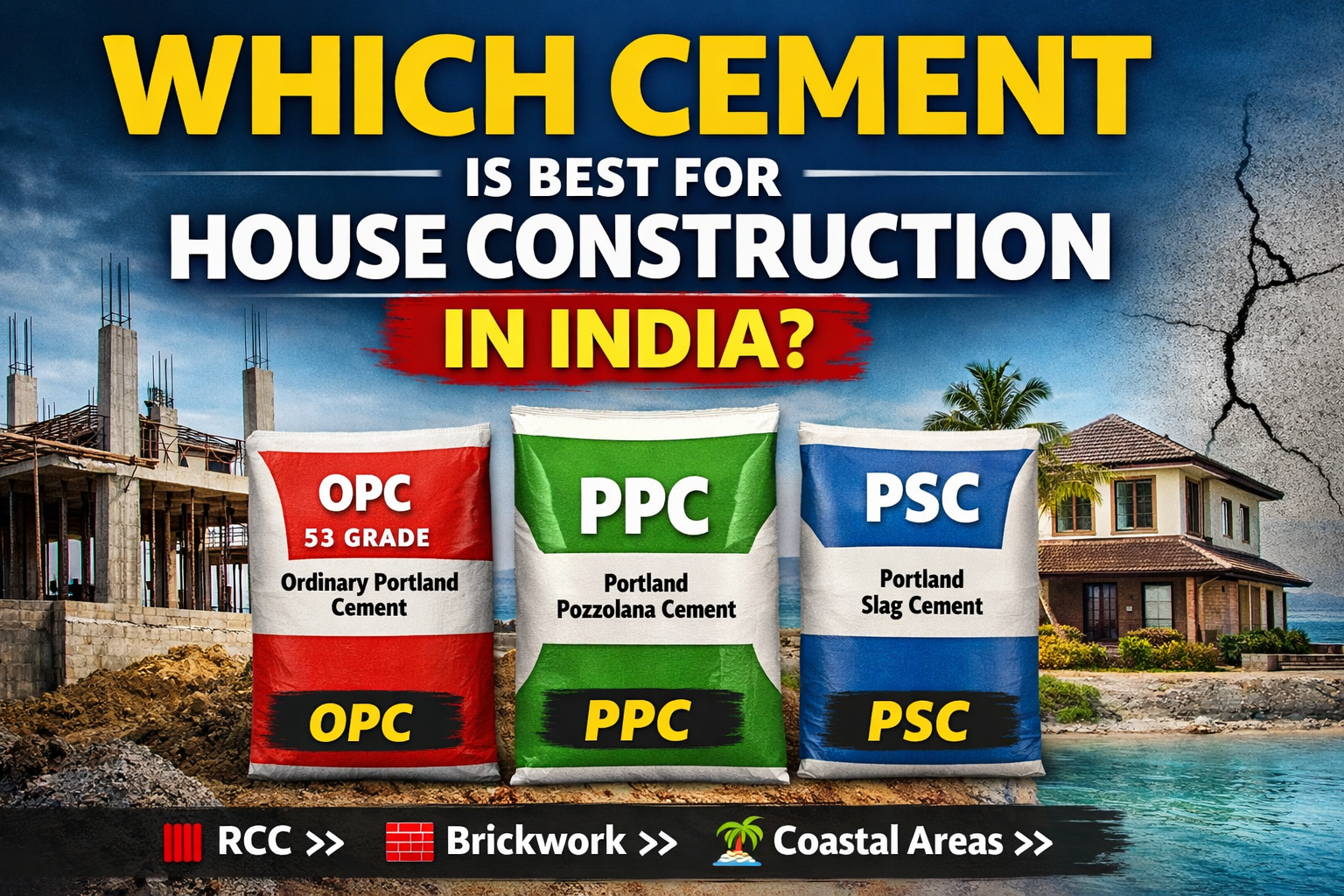
Which Cement Is Best for House Construction in India? (OPC vs PPC vs PSC Explained)

Comparison of OPC, PPC, and PSC cement types for house construction in India with a construction site and coastal house showing where each cement is used.

Many houses in India develop cracks within just a few years of construction. Homeowners often blame the contractor or workmanship. But in many cases, the real problem is simpler: the wrong type of cement was used during construction. Most home buyers focus on cement brands like UltraTech, ACC, or Ambuja. But civil engineers usually look … Read more

Before You Break That Wall: What Every Flat Owner Should Understand

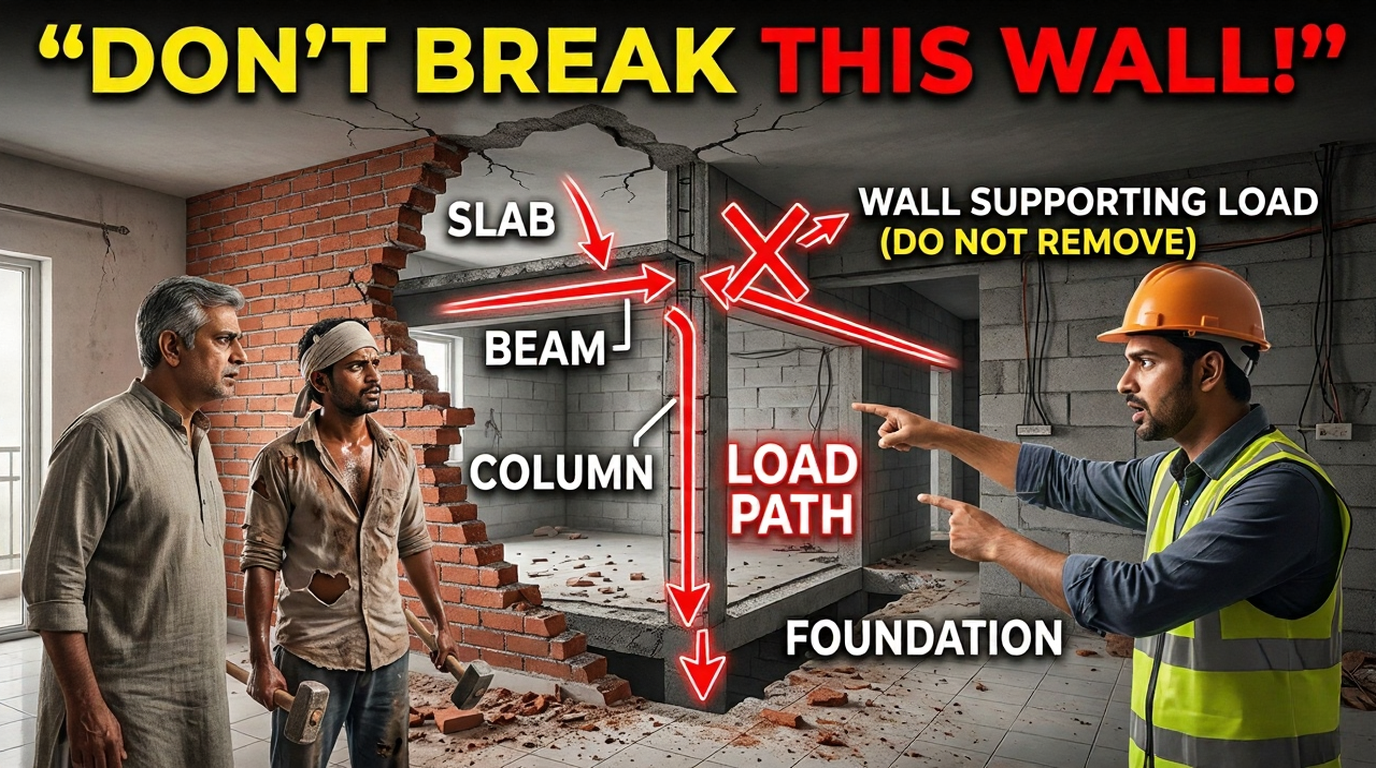
A realistic architectural infographic set in an Indian apartment showing the structural danger of removing a load-bearing wall. A civil engineer points to a red-arrow load path diagram labeled Slab, Beam, Column, and Foundation, while a worried homeowner and worker look on. Text overlay reads: 'DON’T BREAK THIS WALL!'"

Removing a wall in your flat may seem like a simple interior upgrade. It can create open kitchens, larger living rooms, or modern layouts. But in some cases, that small change can quietly affect the structural behavior of the entire building. Many homeowners remove walls assuming they are just partition walls, without understanding how the … Read more

Why Some Buildings Become Death Traps During Fires

A wide-angle landscape photograph shows a modern Indian high-rise apartment building at night, with one upper-story window engulfed in fierce, localized orange flames and thick black smoke billowing out against the dark blue sky. Above the building, a large text overlay in white and yellow font on a dark background reads, "CHECK FIRE EXIT BEFORE BUYING!" and "BEFORE". A prominent red graphic arrow with a yellow outline curves from the fire toward a brightly lit exterior fire exit staircase on the adjoining block of the building. Below the fire, a yellow graphic icon of a flame is crossed out by a large red 'X'. The surrounding residential streets are visible, lined with streetlights and parked, typical Indian vehicles like auto-rickshaws and two-wheelers. In the right foreground, a worried-looking Indian man in a khaki shirt points a finger toward the building. He holds a single house key in his other hand. Standing beside him is an Indian woman in a peach-colored salwar kameez, her expression full of distress as she looks toward the fire, pressing her hands together. The man is also holding an official-looking document with Marathi text, notably the words "साले डीड" (Sale Deed) visible at the top. The couple is positioned as if standing on a rooftop or balcony looking across at the scene.

Imagine living on the 18th floor of an apartment building when a fire breaks out below. The elevators stop working and smoke starts filling the corridor, leaving the staircase as the only way out. At that moment, your safety depends entirely on how the building’s exits were designed. Yet when buying a flat, most people … Read more

Civil Engineer: 5 Early Signs a Builder May Run Out of Money (Most Buyers Notice Too Late)

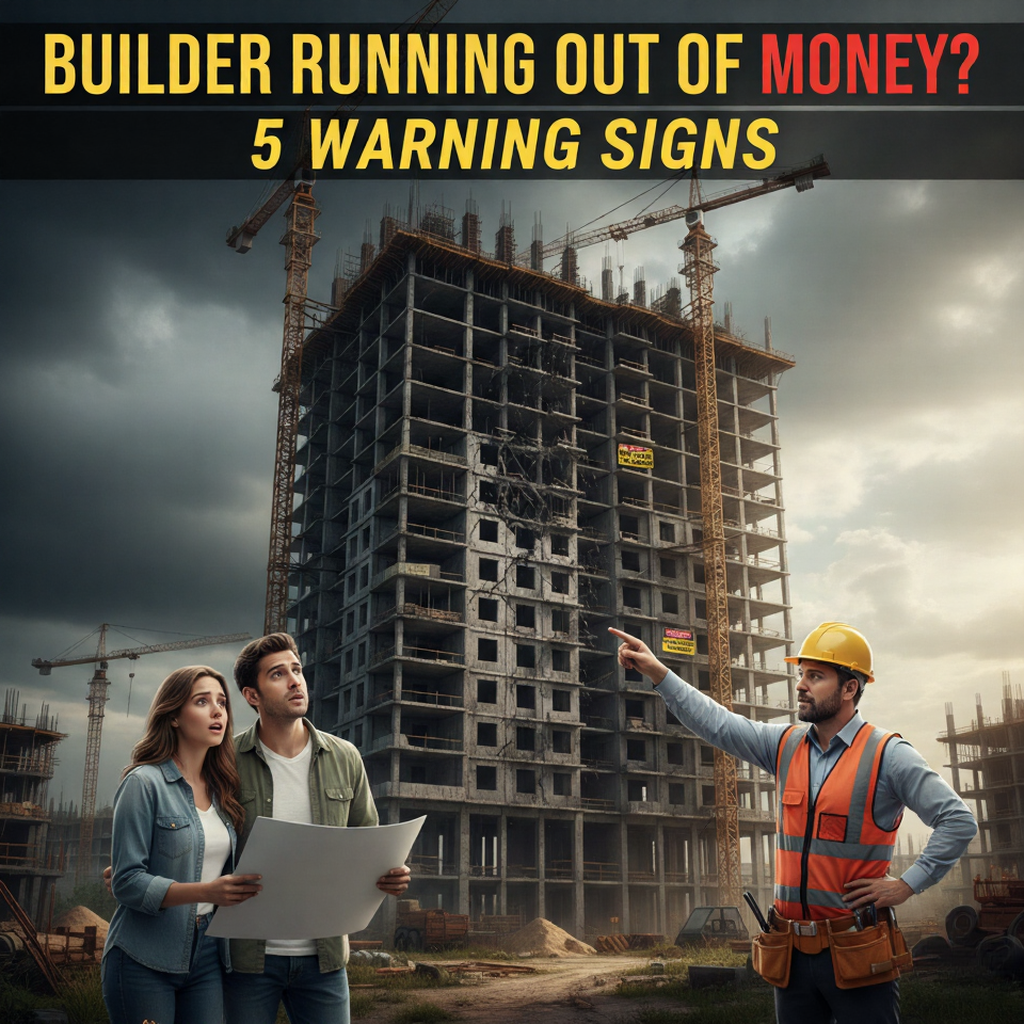
"A dramatic YouTube-style thumbnail featuring a worried young couple holding floor plans in front of a gray, skeletal high-rise building under construction. To the right, a civil engineer in a yellow hard hat and safety vest points toward cracks and structural damage on the building's facade. The sky is dark and moody with storm clouds. At the top, bold text reads 'BUILDER RUNNING OUT OF MONEY?' and '5 WARNING SIGNS' in yellow and red.

Buying an under-construction flat always carries a risk that many buyers underestimate. The builder may run out of money before finishing the project. When that happens, construction slows down, possession gets delayed, and in extreme cases the project stops completely. By the time buyers realize something is wrong, they have already paid 60–90% of the … Read more

Civil Engineer Here: 7 Construction Shortcuts Builders Use That Buyers Usually Discover Years After Possession

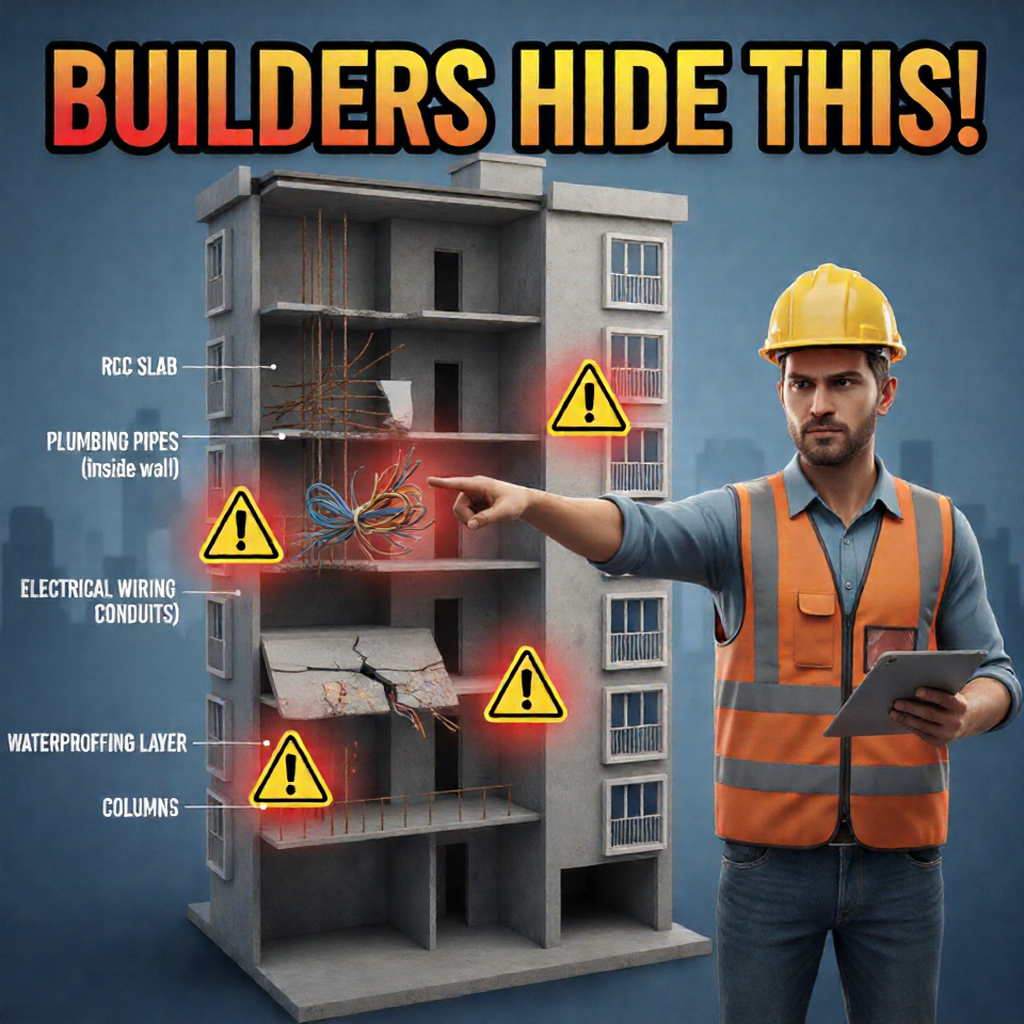
featuring large, bold text at the top that reads 'BUILDERS HIDE THIS!'. On the left is a 3D cutaway model of a multi-story apartment building, revealing severe internal construction defects such as exposed rebar, tangled wiring, and cracked concrete slabs. These defects are highlighted with glowing red spots and yellow caution signs, alongside labels pointing to elements like 'RCC SLAB', 'PLUMBING PIPES', and 'ELECTRICAL WIRING CONDUITS'. On the right stands a serious-looking construction engineer wearing a yellow hard hat and an orange safety vest. He is holding a tablet in one hand and pointing accusingly at the building's hidden problems with the other. The background is a dark blue gradient with a faint city skyline silhouette."

When most people visit a flat before buying, they usually check things like tiles, paint finish, kitchen cabinets, and the balcony view. Everything looks perfect. But here is something most buyers do not realize: the most expensive problems in a building are usually the ones buyers never see during the site visit. The real quality … Read more

A Small Tile Detail Many Builders Don’t Mention That Can Crack Your Floor in 5 Years

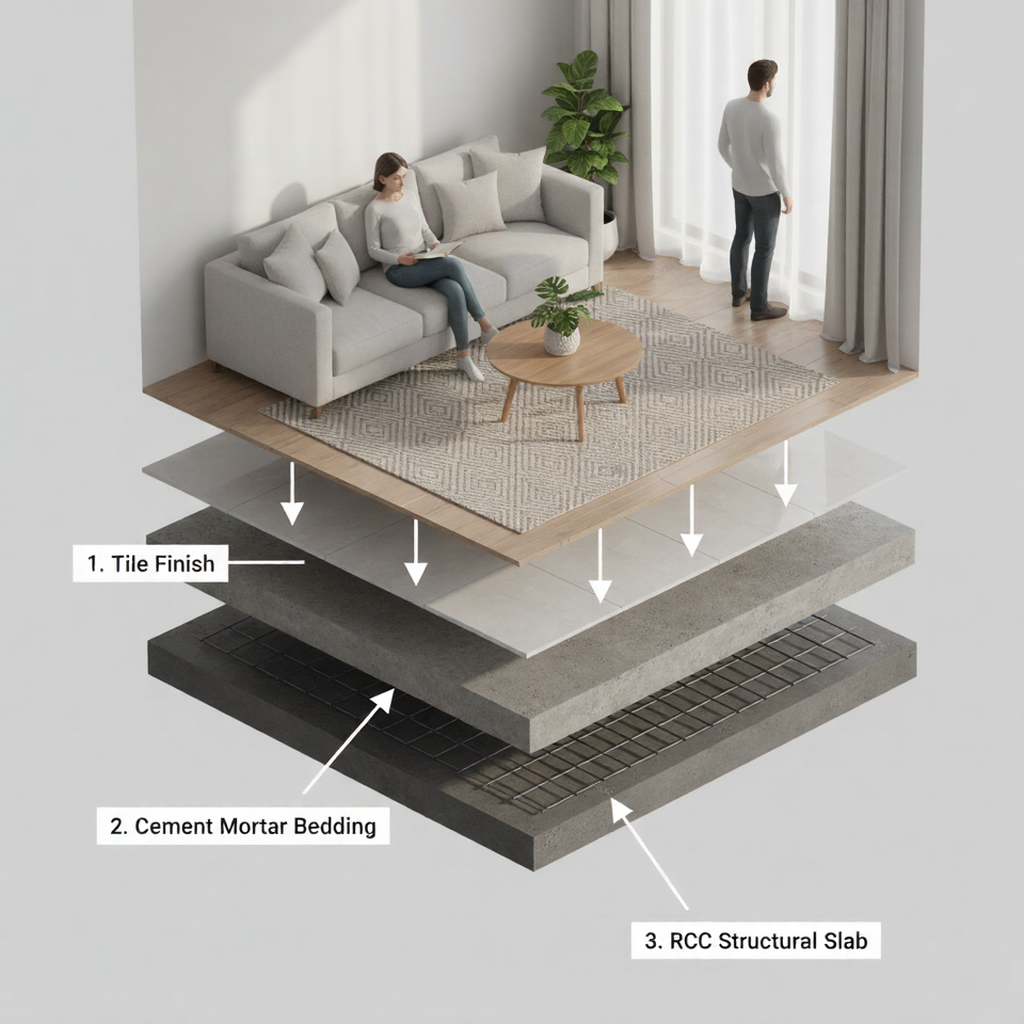
A 3D architectural cutaway infographic showing a living room interior floating above three separated floor construction layers. The layers are labeled from top to bottom: 1. Tile Finish, 2. Cement Mortar Bedding, and 3. RCC Structural Slab."

When buying a new flat or renovating a home, most people spend hours choosing tile color, glossy vs matte finish, and design patterns. But almost nobody checks tile thickness. And that small detail can decide whether your floor lasts 30–40 years or starts cracking in 3–5 years. As a civil engineer, I’ve seen this happen … Read more

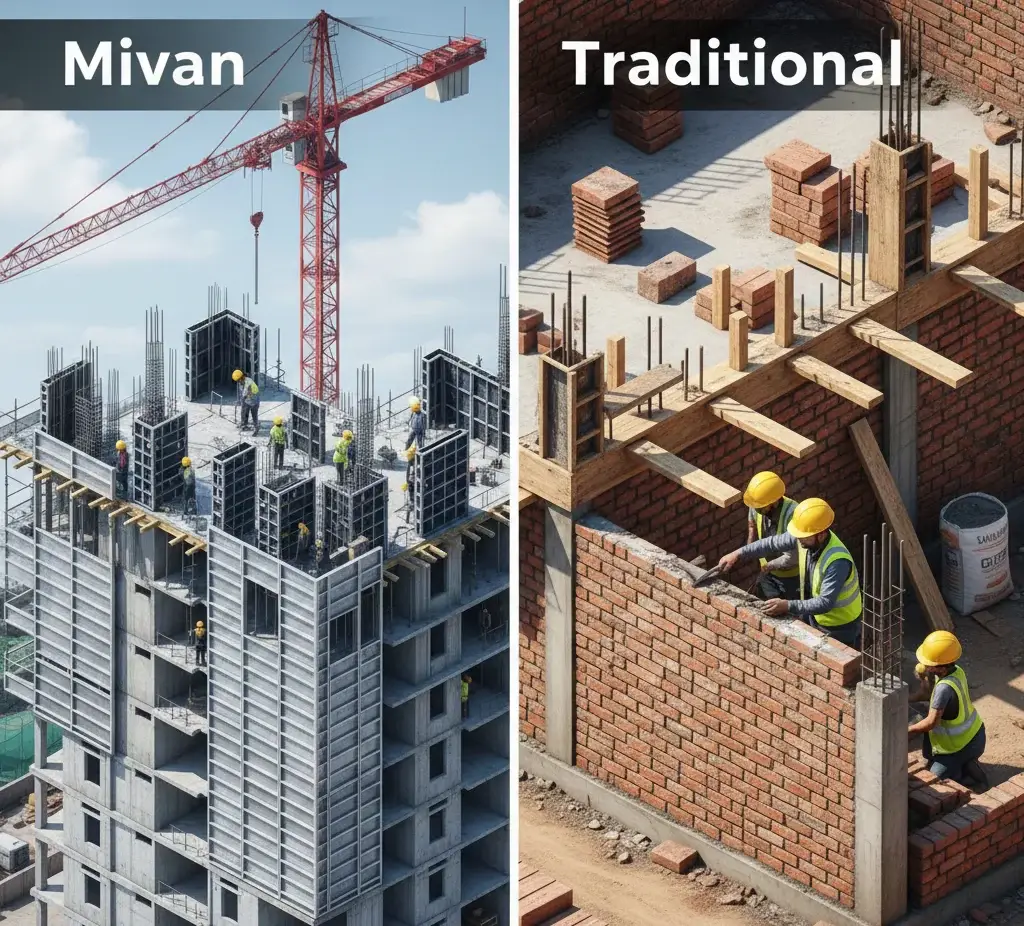
Mivan vs Traditional Construction: What New Home Buyers Realize After Possession (Not Before)

Split image comparing construction methods: Left shows Mivan construction with aluminum formwork and a crane; right shows traditional brick and mortar method.

Most buyers ask whether a project uses Mivan or traditional construction?. However, very few ask the critical follow-up question: “How will this affect my daily life 5–10 years from now?” As a civil engineer, I want to share the uncomfortable truth behind these methods. The Common Misconception Buyers often assume that Mivan is premium and … Read more