
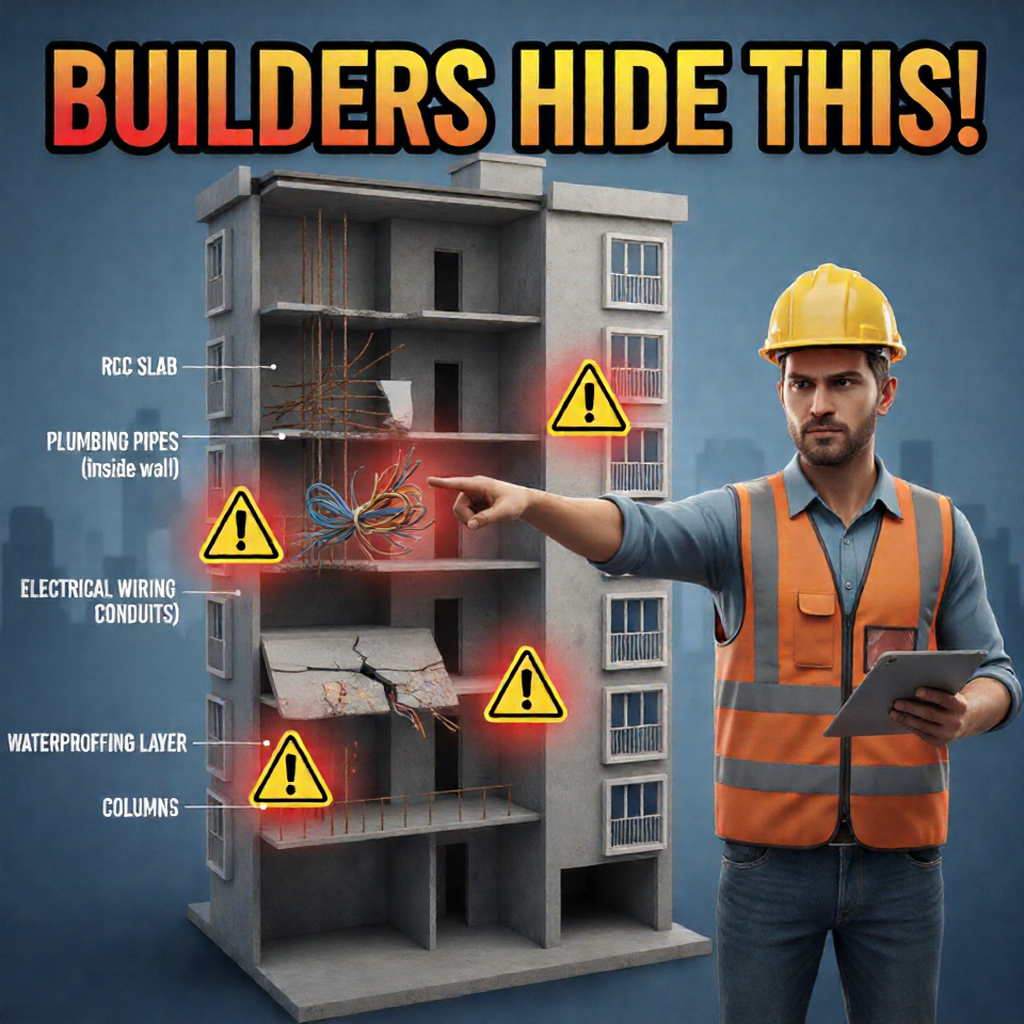
When most people visit a flat before buying, they usually check things like tiles, paint finish, kitchen cabinets, and the balcony view. Everything looks perfect. But here is something most buyers do not realize: the most expensive problems in a building are usually the ones buyers never see during the site visit. The real quality of a building is hidden inside the structure and materials the parts that get covered by plaster, tiles, and paint.
As a civil engineer, I have inspected multiple residential projects where the building looked premium during possession, but residents started facing problems 3–6 years later. In many cases, buyers were surprised to learn that some important construction details were never mentioned during booking. Here are some common ways construction costs are reduced without buyers noticing.
1. Slab Thickness Kept at the Minimum Limit
In residential buildings, slab thickness is typically around 125–150 mm, depending on structural design. But sometimes slabs are designed very close to the minimum allowable thickness. This is done because even a small reduction saves money on:
- concrete
- reinforcement steel
- formwork
Across a large project, this can save the developer lakhs of rupees. Buyers cannot notice this because the slab is hidden under flooring and plaster. But thinner slabs can sometimes lead to more heat transfer, more vibration when people walk, and more sound traveling between floors.
2. Columns Optimized Right to the Edge
Columns carry the entire load of the building. In some projects, column sizes are slightly reduced while increasing reinforcement steel so the design still passes structural calculations. Technically the structure may still meet engineering requirements, but it leaves less margin for unexpected loads in the future. Buyers cannot detect this because columns are hidden inside walls.
3. Cheaper Plumbing Pipes Inside Walls
Plumbing systems are one of the most common areas where cost cutting happens. Instead of higher-grade pipes, some projects install:
- thinner CPVC pipes
- cheaper fittings
- lower-quality valves
Everything works fine during possession. But after a few years residents may start facing water leakage inside walls, pressure issues, and pipe cracks. By the time buyers discover the problem, repairs often require breaking walls and redoing plumbing, which can cost a lot.
4. Basic Waterproofing Instead of Proper Systems
Waterproofing is expensive and completely invisible. Because buyers cannot see it, some projects use basic waterproofing coatings instead of proper multi-layer systems in areas like terraces, bathrooms, and basements. Everything looks fine initially. But after a few monsoons problems start appearing, such as damp patches on walls, peeling paint, and ceiling seepage. I once inspected a 6-year-old residential building where residents kept facing ceiling leakage. The issue was traced back to inadequate waterproofing during construction.
5. Lower Grade Electrical Wiring
Electrical wiring is hidden inside conduits. To reduce cost, some projects install wires with lower copper thickness. This is impossible for buyers to notice during inspection. But over time it can lead to overheating, voltage drops, and reduced appliance life. 6. Cheap Window Hardware
Two aluminium windows may look identical, but the real difference is often inside the hardware. Some projects reduce cost by installing cheaper:
- rollers
- hinges
- locking systems
After a few years residents may start facing windows not sliding smoothly, rattling during strong winds, and lock failures.
7. Premium Flat but Basic Common Areas
Sample flats are designed to impress buyers. But sometimes builders reduce cost in common areas using thinner granite, cheaper tiles, and basic lighting fixtures. Since buyers focus mainly on their own flat, these details often go unnoticed until the building starts aging.
What Smart Buyers Should Actually Check
Before booking an under-construction flat, try asking about:
- slab thickness
- plumbing pipe brand
- electrical wire specifications
- waterproofing system used
- window profile thickness
Most buyers never ask these questions. But these details determine how the building performs after 10–20 years. A flat can look perfect on possession day, but the real test of construction quality begins five years later. By the time hidden construction shortcuts start appearing, the builder is usually long gone.
If this guide helped you avoid a costly mistake while buying a home, you can support my work here: