
most people walk into a flat viewing and immediately check the view, maybe mumble something about vastu, measure the carpet area in their head, get a feel for the society vibe.
but you know what actually decides whether you make it out alive during a fire? not your imported sofa. not that expensive modular kitchen everyone’s installing these days. not even the crores you paid.
it’s whether you can get the hell out.
look, i’m a civil engineer, not some fire safety consultant. but i’ve seen enough floor plans to know what to look for. and honestly? most buyers don’t even think about this until it’s too late. so let me walk you through how to read a floor plan like someone who actually wants to survive.
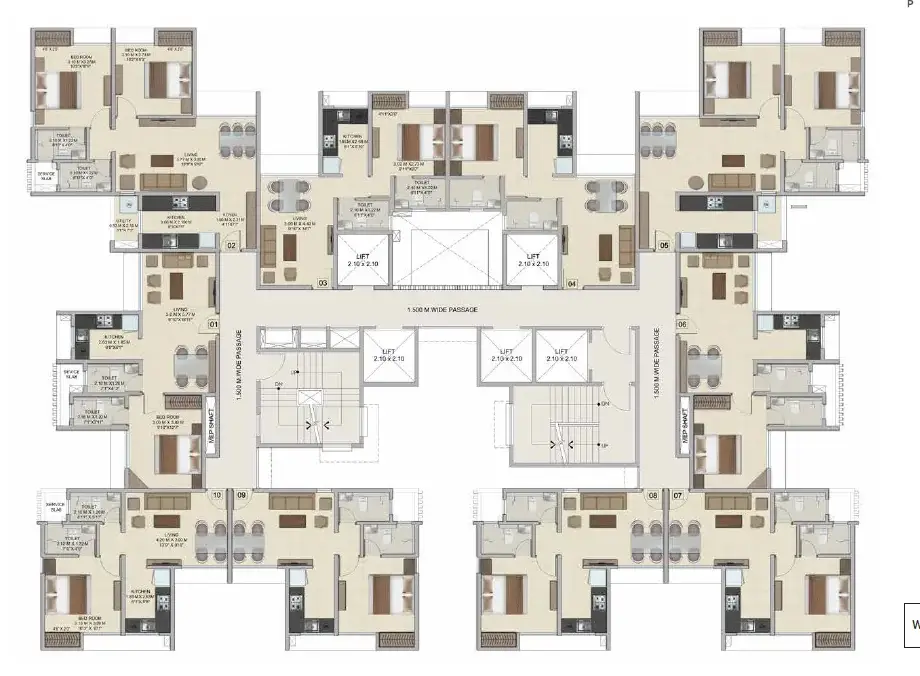
i’m looking at a 35 storey high rise here. 10 flats per floor. pretty standard mumbai bangalore setup.
and before you think i’m trying to scare you i’m not. i’m trying to make sure you don’t end up trapped because you never asked the right questions.
here’s the thing about high rise fires that nobody tells you:
most people don’t die from flames. they die from smoke. from confusion. from exits that looked great on paper but don’t work when you’re coughing your lungs out in zero visibility.
so let’s break down this layout.
the staircases
first thing i look for. this plan has two staircases one left side, one right side. for a 35 floor building, two is the bare minimum. so far so good.
but here’s what buyers always miss: both these staircases are completely internal. only very small windows. no natural air. they’re banking on fire doors and something called pressurization to keep smoke out.
which is fine, except do you know if those systems actually work? because if smoke gets into that staircase, your escape route just became a death trap.
questions you need to ask: are these staircases actually enclosed with fire rated walls? are there proper fire doors? does the pressurization system kick in automatically during an alarm?
don’t just tick the two staircases box and move on.
that corridor everyone walks through
the plan shows a 1.5m wide passage. sounds reasonable, right? you can walk through it fine during a house tour.
but fire safety isn’t about casual walking. it’s about people running, panicking, coughing, in pitch black smoke. and this corridor? it’s landlocked. no windows. no natural ventilation in the middle passage at all.
that’s a problem. because smoke that gets in here doesn’t escape. it just spreads. fast.
the corner flats
look at flats at one end. then at the other end. these are what i call dead end situations.
if a fire blocks the middle section, these people can only run in one direction. that’s it.
so ask this: from my front door to the nearest staircase what’s the actual walking distance? is it within the safe limits according to fire codes?
because let me tell you, 30 meters feels like 300 meters when you can’t see and can’t breathe.
the lift lobby
this building has 5 lifts for 10 flats. honestly, that’s pretty premium. great for daily comfort.
but in a fire? lifts are useless. worse than useless they can act like chimneys that suck smoke up. and if that lift lobby is connected to the main corridor (which it usually is), smoke reaches it fast.
don’t just count the lifts. ask: which one is the fire lift? does it have backup power? is there a fireman switch? is the lift lobby actually separated from the corridor, or is it open?
where do those stairs actually go?
two staircases give you redundancy if one’s blocked, you have another option. that’s good.
but do both staircases lead directly outside at ground level? or do they dump you into some closed lobby where you’re still trapped inside the building?
direct outside exit is what you want. you don’t escape one smoke zone just to walk into another.
the basement nobody thinks about
everyone thinks fire means their flat catches fire. but basement fires in high rises are absolute nightmares.
heat trapped. smoke shooting up through every shaft. firefighters can’t even access it properly.
even if you live on the 25th floor, a basement fire can still cut off your escape.
ask: is there a sprinkler system in the basement? smoke extraction? proper fire access for emergency vehicles?
my biggest concern with this layout
the corridor is completely enclosed. i don’t see natural smoke relief anywhere. which means this entire building is dependent on mechanical exhaust fans.
if those fans fail or if the backup generator doesn’t kick in that corridor fills with toxic smoke in minutes.
and i’ll say it again because it matters: smoke kills more people than fire.
my quick rating: 6.5/10
what i like: two staircases, good lift count, decent passage width.
what worries me: enclosed corridor with no natural ventilation, corner flats with limited escape options, total dependence on mechanical systems that could fail.
who should really think twice?
families with elderly parents. anyone with mobility issues. people planning to live on the 30th+ floor without actually verifying that the fire systems are maintained properly.
my actual advice
stop asking only about flat price.
start asking: if the fire alarm goes off tomorrow, how exactly am i getting out of here?
quick disclaimer: this is a layout level screening based on what i can see in the plan. actual fire safety depends on a lot more fire noc, proper fire doors, sprinklers, hydrants, alarm systems, smoke extraction, and whether everything’s actually built to code. please talk to a licensed fire safety expert before you buy.