
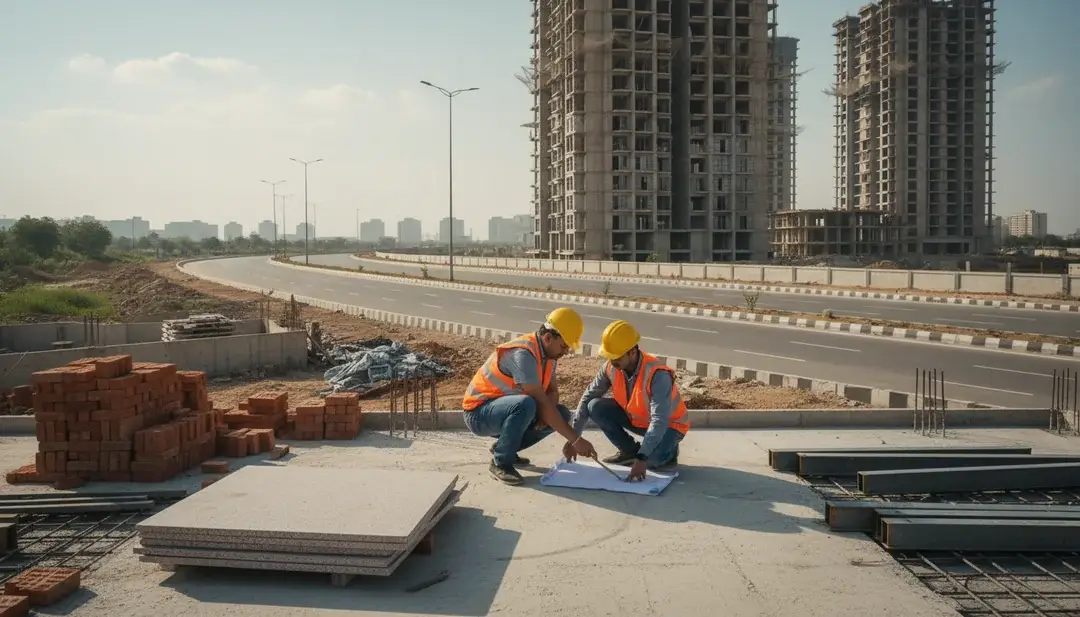
When you buy a flat, traffic usually feels manageable. Roads look wide and the commute seems reasonable. Builders often say the area is developing fast. Fast-forward 2–3 years and that same 3 km now takes 25–40 minutes. Peak hours feel permanent and even short exits feel stressful. The flat didn’t change, but the surroundings did.
If traffic becomes such a big daily problem later, why don’t buyers see it coming while purchasing? Is it bad planning, or are we looking at the wrong signals?
Here is where most people get it wrong:
- You see today’s traffic, not future load
When you buy, only 1–2 projects are occupied and many buildings are still under construction. Once 5–10 projects get possession, population multiplies overnight while roads do not.
2. Builders talk growth, not capacity
You hear about IT parks, malls, or proposed metros. What is not discussed is road width, signal planning, and entry–exit bottlenecks. Growth without infrastructure = traffic chaos.
3. Site visits happen at the wrong time
Most visits are midday, weekends, or holidays. You never experience the school rush, office peak hours, or the rain + traffic combo. The problem stays invisible.
4. One road dependency is a silent trap
Many new projects depend on one main access road, one junction, or one service road. The day that road gets overloaded, the entire area suffers.
5. Construction traffic never really leaves
After possession, construction vehicles continue as new towers start nearby. Roads get damaged and traffic compounds rather than improves.
Before buying, stop asking if traffic is bad now. Start asking what traffic will look like after full occupation. Practical checks that actually help:
- Count projects, not just roads
Look at how many societies are around and how many units are coming up in a 2–3 km radius. More units + same roads = future congestion.
2. Visit during peak stress times
Check the area during weekday mornings (8–10 AM), evening return hours, and one rainy day if possible. That is real traffic.
3. Identify choke points
Look for narrow bridges, signals near society gates, and U-turns or service road merges. These decide daily frustration.
4. Check alternate exits
Is there more than one way out, or does everything funnel into one junction? Single exit areas age badly.
5. Do not overtrust the upcoming metro
While the metro helps some people, it does not reduce car volume significantly. Traffic usually increases before it improves.
Traffic does not ruin your life suddenly. it erodes it daily, one commute at a time. A flat can be perfect inside and still feel unbearable because of the roads outside. When buying, remember that buildings rise fast, but roads do not.