
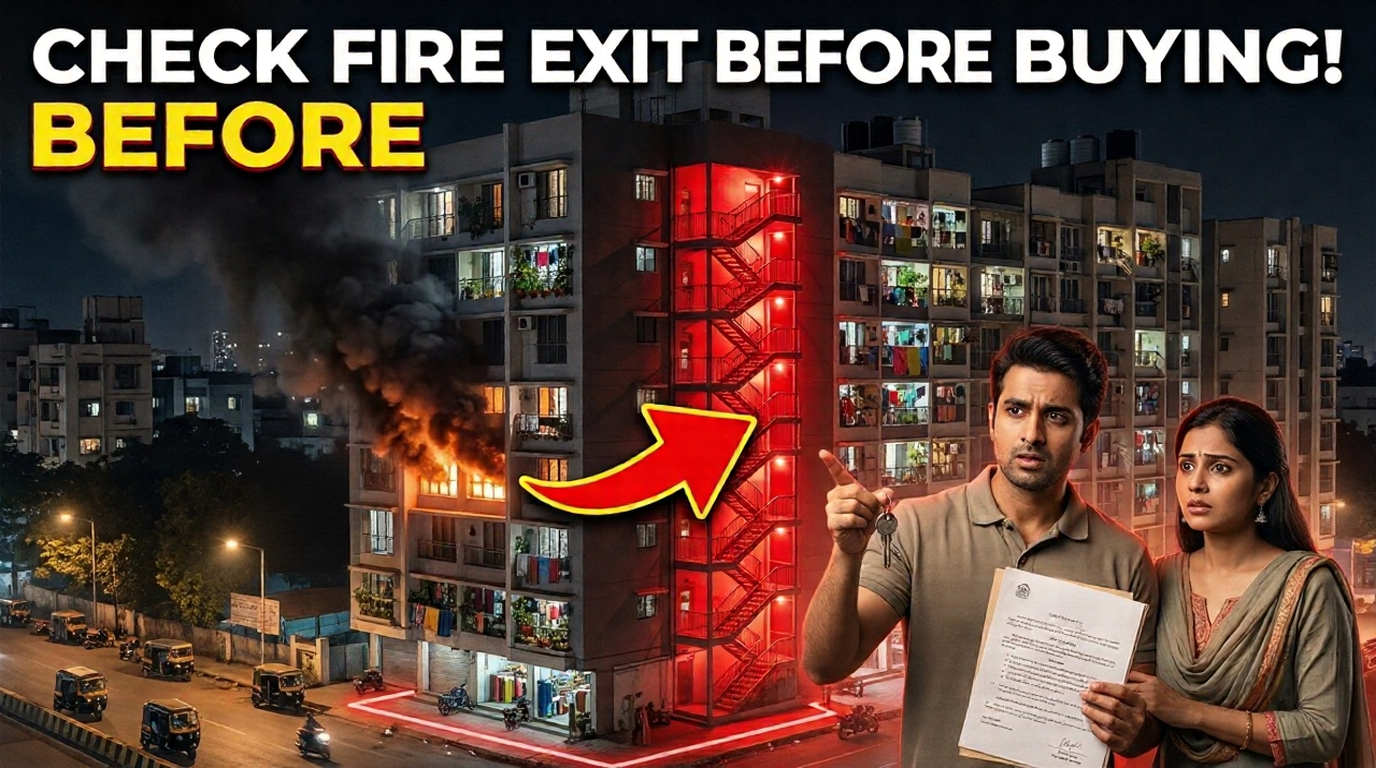
Imagine living on the 18th floor of an apartment building when a fire breaks out below. The elevators stop working and smoke starts filling the corridor, leaving the staircase as the only way out. At that moment, your safety depends entirely on how the building’s exits were designed.
Yet when buying a flat, most people only check price, parking, amenities, and interior design. Very few ask if the building actually follows fire safety rules. The National Building Code of India (NBC 2016) defines strict requirements for fire safety in buildings. These rules focus on the means of egress, which is the path people use to exit a building during an emergency. Understanding a few of these rules can quickly tell you whether a building is designed for real safety or just approval paperwork.
- Staircase Design (Safe Evacuation Path)
NBC specifies exact measurements for residential staircases. The minimum tread width must be 250 mm (without nosing), and the maximum riser height is 190 mm. There is a limit of 15 risers in one flight, and the minimum clear headroom must be 2.2 meters.
The tread is where your foot rests, and the riser is the vertical step height. These limits ensure people can move quickly and safely during evacuation without losing balance or causing bottlenecks.
2. Protected Escape Routes for Basements
Basements present higher fire risk because smoke accumulates quickly. NBC requires at least one stair tower enclosed in a smoke-tight, non-combustible shaft. This prevents smoke and fire from entering the escape route, allowing occupants to exit safely from basement levels. Some buildings may also require external fire escape systems, such as ladder-type exits extending from roof level to ground level and accessible from all floors.
3. Exit Doors Must Always Work During Emergencies
Many buildings install electronic access control systems. NBC requires these doors to be fail-safe. If power fails, exit doors must automatically unlock in the direction of egress. NBC also requires a manual release device, such as a PUSH TO EXIT button, near exit doors. This ensures occupants can open the door even if electronic systems malfunction. Exit routes must also remain unobstructed.
4. Fire Protection Systems Based on Building Height
NBC requires different firefighting systems depending on building height. Buildings between 15 m to 35 m must include fire extinguishers, first aid hose reels, wet risers, and automatic sprinklers in specific areas.
Buildings above 35 m must include additional systems such as yard hydrants, larger water storage tanks, and higher capacity fire pumps. These systems allow firefighters to control fires effectively in taller buildings.
5. Fire Alarms and Emergency Communication
Buildings 15 meters or taller must have Manually Operated Electronic Fire Alarm (MOEFA) systems. These may include talk-back communication systems and public address systems. For residential categories mention in NBC, these communication systems become mandatory for buildings 24 meters and above. These systems help guide occupants during evacuation.
6. Smoke Control and Emergency Systems
NBC requires several safety measures to ensure escape routes remain usable. Emergency lighting must activate within 5 seconds during power failure. High-rise staircases must be pressurized to prevent smoke from entering evacuation routes. Passenger lifts should not be used during fires instead, occupants should use designated staircases or fireman’s lifts operated by trained personnel.
7. Clear Orientation and Safety Signage
During emergencies, people must quickly identify exits and building levels. NBC requires large floor identification numbers in stairwells and lift lobbies, as well as clearly illuminated exit signs. NBC also recommends Tactile Ground Surface Indicators (TGSI) placed 300 mm before the start and end of stairs or ramps. These tactile markers help visually impaired occupants detect changes in floor level.
What Many Buildings Get Wrong
In real buildings, some common issues still appear, such as staircases blocked by shoe racks or storage, exit doors locked at night for security, refuge areas used as storage spaces, and poor maintenance of sprinkler systems.
Even if the building was designed correctly, poor maintenance can compromise safety.
Why These NBC Rules Matter
During a fire emergency, the swimming pool, clubhouse, and interior design do not matter. What matters is whether the building allows people to escape safely. Understanding these NBC fire safety rules helps buyers evaluate whether a building is truly designed for safety or just designed to sell.