
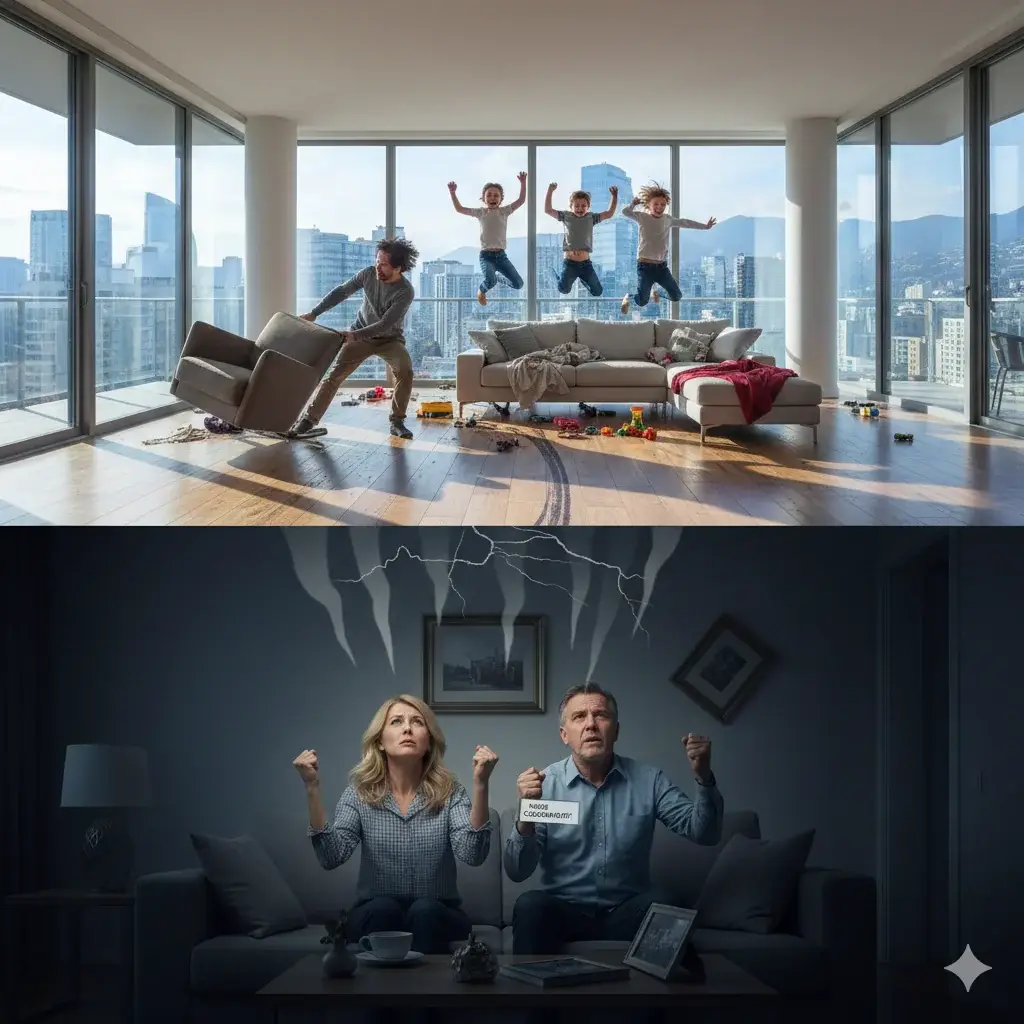
Most people realise this only after moving in.
You’re sitting in your living room and suddenly:
- you hear footsteps above
- chairs dragging sound like it’s in your house
- kids running upstairs becomes unbearable
And someone always says:“That’s apartment life.”
As a civil engineer, I want to be very clear:
In many cases, this has nothing to do with neighbours.
It has everything to do with slab thickness and floor detailing.
Why this problem doesn’t show up during buying
When you visit a flat:
- the building is empty
- no one lives upstairs
- no furniture is being moved
- no daily activity
So everything feels peaceful.
Noise problems don’t show up in site visits.
They show up after occupancy when fixing them is no longer possible.
What the slab actually does (simple explanation)
The slab between two flats has two jobs:
- Structural safety
- Sound & vibration control
Most buyers only think about job #1.
But job #2 is what decides your daily peace.
Why sound travels down so easily
Footsteps, running, dragging furniture these are impact noises.
Impact noise:
- doesn’t travel through air
- travels through concrete directly
If the slab is thin, it vibrates more.
More vibration = more noise downstairs.
This is basic physics, not opinion.
Thinner slabs = more complaints
From real projects and real buildings:
- thinner slab → less mass → more vibration
- thicker slab → more mass → less vibration
Modern construction often uses minimum thickness slabs:
- safe structurally
- economical
- but weak acoustically
Structurally approved does not mean acoustically comfortable.
What slab thickness is actually decent (practical ranges)
Exact thickness depends on design, but generally:
- 120–130 mm slab Structurally okay, but noise complaints are common
- 140–150 mm slab Better balance, fewer complaints
- 160 mm and above Noticeably better sound isolation
Thickness alone isn’t everything — but very thin slabs almost always cause problems.
Things that make the noise problem worse
Even a decent slab performs badly if:
- tiles are fixed directly on slab (no screed)
- no sound-absorbing layer is used
- upstairs flat has hard flooring everywhere
- no rugs, no underlay, no soft finishes
Many projects skip these layers to save cost.
Buyers pay for it later.
Why top-floor noise feels worse than side noise
Because:
- impact noise goes straight down
- walls block air-borne noise better
- slabs transmit vibration directly
That’s why footsteps above feel louder than voices next door.
What new buyers should actually check (practical)
If you’re buying a flat, don’t hesitate to ask:
- slab thickness in drawings/specs
- whether screed or leveling layer is provided
- flooring type allowed in upper flats
- noise feedback from existing residents
- avoid flats below gyms, play areas, terrace amenities
These matter more than most brochure features.
One uncomfortable truth
A slab can be:
- legally approved
- structurally safe
- certified
…and still make daily life noisy and stressful.
Acoustic comfort is rarely regulated strictly.
It’s often where cost-cutting hides quietly.
My honest takeaway
You can change:
- interiors
- furniture
- flooring finish
You cannot:
- thicken the slab after construction
If peace and quiet matter to you, slab thickness and floor detailing deserve attention before you buy not after.