
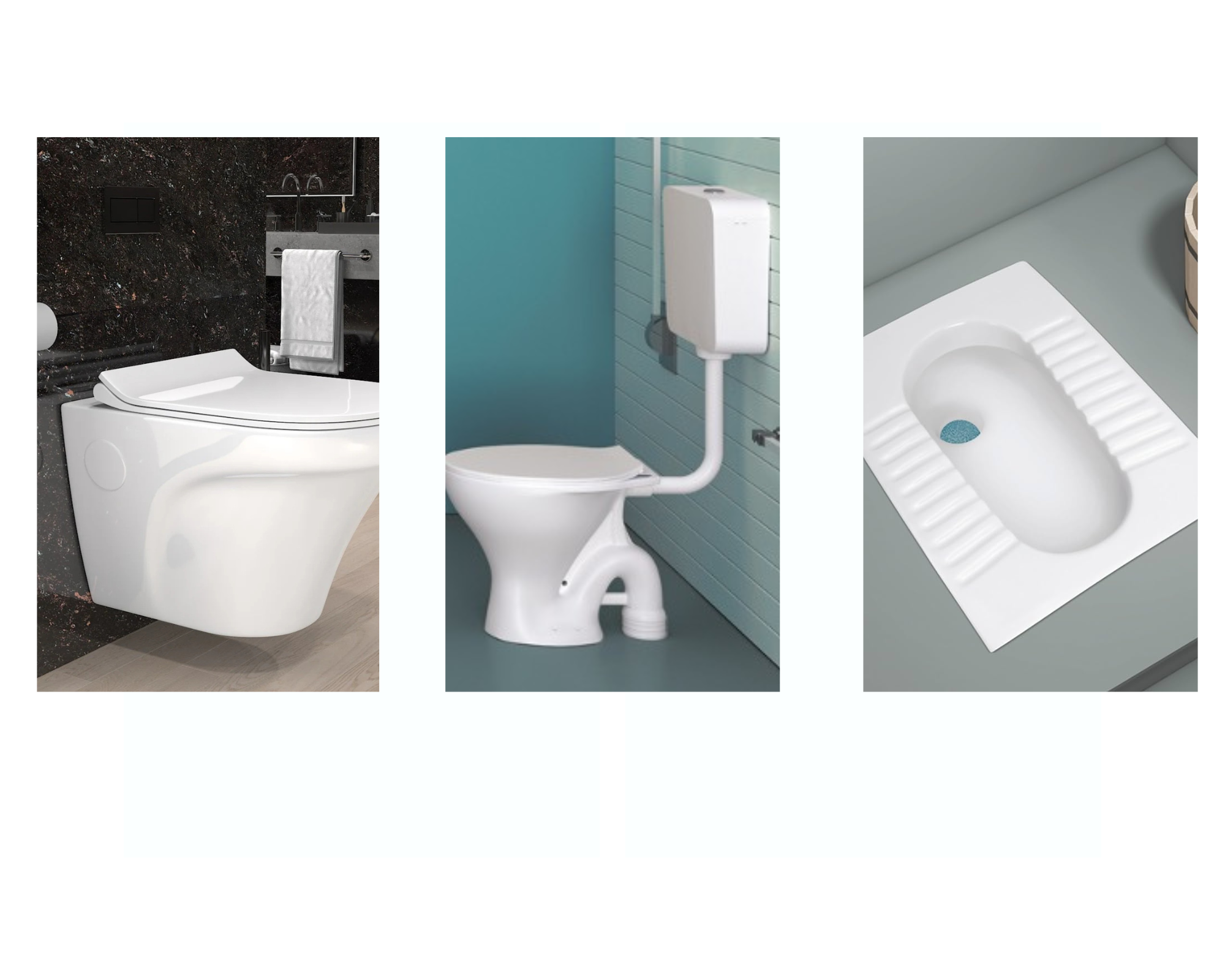
I’m a civil engineer, and I’ve seen this happen in many flats. People spend weeks choosing tiles, modular kitchen, lighting, and paint. But toilets? They just copy the builder or choose whatever looks modern. Then after possession:
– Water pressure drops in summer
– Tanker water starts
– Concealed tanks give weak flushing
– Bucket flushing becomes necessary
– Repairs become messy
And suddenly the “premium bathroom” becomes a daily irritation.
Questions buyers should ask (but usually don’t):
– What happens if water pressure becomes low?
– Will bucket flushing work properly?
– Is the toilet easy to repair after 5–10 years?
– Is my drainage pipe in the wall or floor?
– Am I choosing based on looks or practicality? Most buyers never ask these.
why people still make wrong choice:
– Builders push wall-mounted toilets because they look premium in brochures.
– Showrooms focus on design, not plumbing practicality.
– Buyers don’t know about trap types or water pressure impact.
– Nobody plans for tanker water or pump failure. So decisions are based on showroom aesthetics, not real-life usage. practical rules from site experience
Rule 1: If you have a 2 BHK or 3 BHK
Keep at least one toilet floor-mounted or Indian style. Because if water shortage happens:
– Bucket flushing works easily
– No pressure dependency
– Repairs are simple
– No concealed tank worries
Wall-mounted toilets are fine for looks, but they assume stable water supply.
Rule 2:
Understand toilet type differences
Wall-mounted:
– Looks modern, saves space
– But costlier and pressure dependent
– Concealed repairs harder
Floor-mounted:
– Reliable in low water pressure
– Easy maintenance
– Cheaper and durable
Indian toilet:
– Best during water shortage
– Very low maintenance
– Not comfortable for elderly though
Rule 3: Check P-trap vs S-trap before buying
This isn’t about brand it’s about your drainage pipe.
– P-trap -> outlet goes into wall
– S-trap -> outlet goes into floor
Both hold water inside them, which prevents sewer gas and foul smell from entering the house. If you buy the wrong trap type:
– Plumber does jugad fitting
– Flushing weak
– Smell leakage possible
– Fixing later means breaking tiles
Always check where the drain hole is before buying any commode.
Builders design for brochure photos. Homeowners should design for real-life situations.