
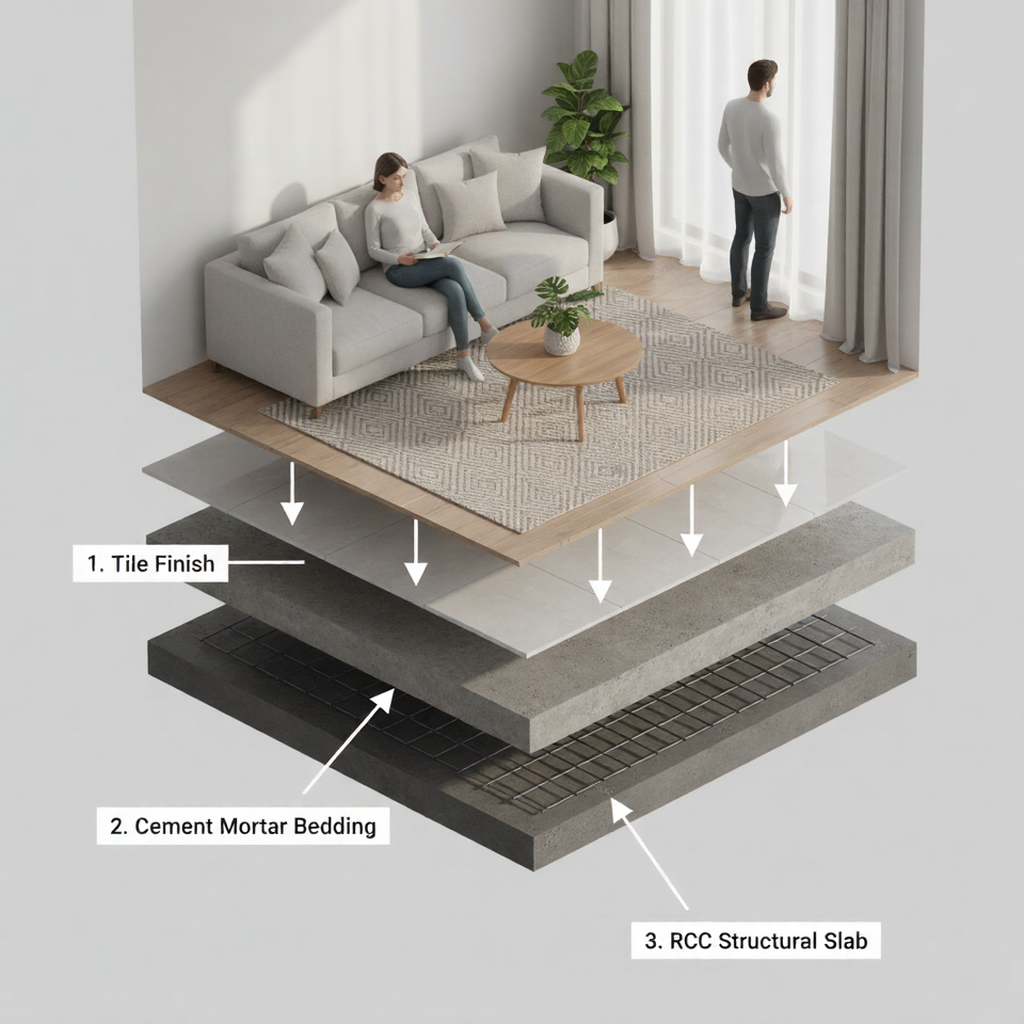
When buying a new flat or renovating a home, most people spend hours choosing tile color, glossy vs matte finish, and design patterns. But almost nobody checks tile thickness. And that small detail can decide whether your floor lasts 30–40 years or starts cracking in 3–5 years. As a civil engineer, I’ve seen this happen on multiple residential sites.
Tiles look strong, but they are actually just a surface layer. Their real job is to spread the load from furniture and people to the slab below.
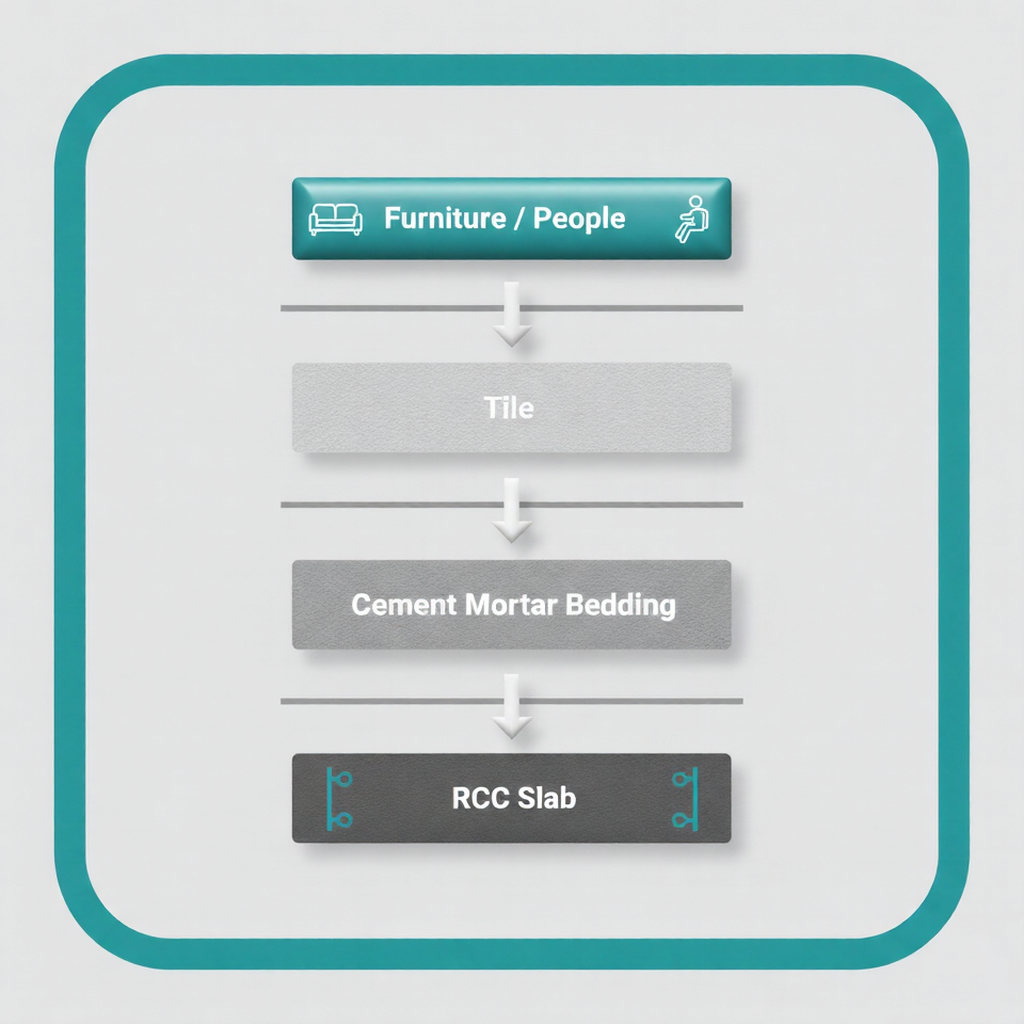
If tiles are too thin, they cannot distribute the load properly. That’s when problems begin:
- Cracks appearing in tiles
- Edges chipping
- Hollow “tok-tok” sound when walking
- Tiles breaking under heavy furniture
Most homeowners assume it’s a tile quality issue. But often, the real cause is tile thickness. Questions Most Buyers Never Ask
When selecting tiles, buyers usually ask things like: “Is this design modern?”, “Is the finish glossy or matte?”, or “Will this match my interior?” But the important questions rarely get asked:
- How thick is the tile?
- – Is it meant for walls or floors?
- – Can it handle heavy furniture?
- – Is it suitable for high-traffic areas? Thickness is one of the biggest factors affecting tile durability.
Where Most People Get Misled
Many people think tiles are all basically the same. But tile thickness varies depending on how the tile will be used. Typical ranges used in India:
- Decorative / mosaic tiles: 4–6 mm
- Wall tiles: 6–10 mm
- Floor tiles: 8–12 mm
- Outdoor / parking tiles: 15–20 mm
Walls use thinner tiles because they don’t carry load. Floors require thicker tiles because they must handle constant foot traffic, furniture weight, and occasional impact.
What Actually Happens on Construction Sites
Here’s a real example from a residential project I inspected. The builder used 6 mm vitrified tiles in the living room to reduce cost. Initially everything looked perfect. But after about 3 years, residents started noticing cracks near the refrigerator area, tiles breaking near sofa legs, and a hollow sound while walking. The tiles themselves were not defective. They were simply too thin for the load they were carrying.
Another Common Sign: The “Tok-Tok” Tile Sound
Many homeowners notice this but ignore it. When walking on the floor, some tiles make a hollow “tok-tok” sound. This usually means there is an air gap between the tile and the mortar bed. Thin tiles flex slightly over these gaps. Over time, they can crack suddenly.
What Engineers Actually Check
If you are buying a flat or planning flooring, this is what I usually recommend. Minimum tile thickness for durability:
- Living room floor: 10–12 mm
- Kitchen floor: 10–12 mm
- Bathroom floor: 8–10 mm
- Wall tiles: 6–8 mm
- Outdoor / parking tiles: 15–20 mm
And one simple test during site visits: Take a coin or key and tap the tiles. Sound meaning:
- Solid sound: good installation
- Hollow sound: possible bonding issue
This small check can reveal many hidden flooring defects.
People often spend large amounts on designer lights, decorative walls, and expensive furniture. But the floor beneath their feet gets the least attention. Yet flooring is the most used surface in the entire house. If tile thickness and installation are correct, flooring can easily last 30–40 years without major problems. If not, fixing it later usually means breaking and replacing the entire floor.
I created a Pre-Booking Flat Risk Audit (30-minute inspection framework) buyers can use during site visits.