
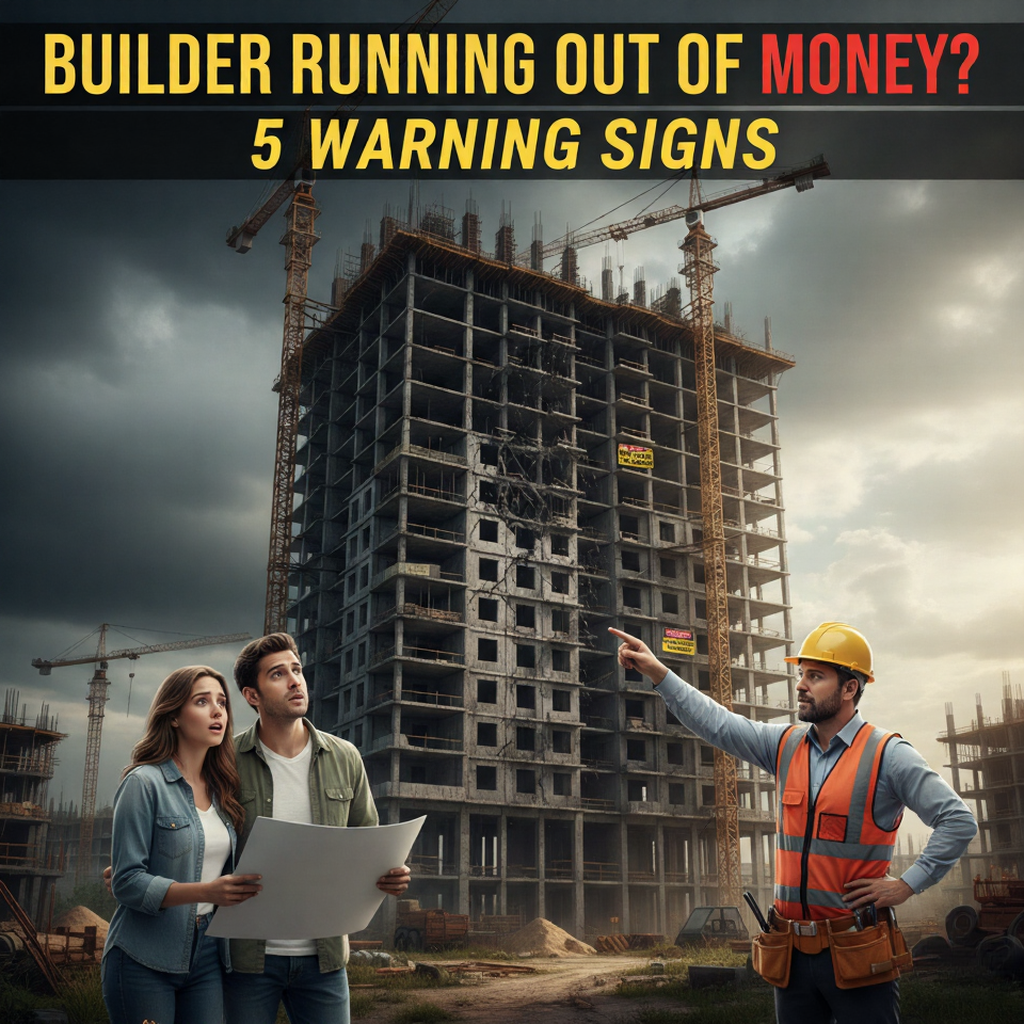
Buying an under-construction flat always carries a risk that many buyers underestimate. The builder may run out of money before finishing the project. When that happens, construction slows down, possession gets delayed, and in extreme cases the project stops completely. By the time buyers realize something is wrong, they have already paid 60–90% of the flat price.
What most people don’t realize is this: Projects rarely collapse suddenly. There are usually warning signs months before the problem becomes visible. As a civil engineer, I’ve seen these signals appear on construction sites long before buyers realize what is happening. The Mistake Most Buyers Make.
During site visits, buyers usually check things like:
- sample flat
- balcony view
- amenities
- interior finishing
But almost nobody evaluates the financial health of the project. And that is often where the real risk exists. Even a good design and a reputed builder cannot save a project if cash flow breaks down.
“But RERA Protects Buyers… Right?”
The Real Estate Regulation Act (RERA) was introduced to protect homebuyers. It brought rules like:
- project registration
- escrow accounts for construction funds
- declared completion timelines
These rules improved transparency. However, in real-world projects loopholes and enforcement gaps still exist. Even Supreme Court slams RERA, says law seems to help builders, not buyers news liink-Newindisnexpress news. This is why buyers should not rely only on regulation. Understanding project risk is equally important.
5 Early Signs a Builder May Run Out of Money
These warning signals are often visible on the site months before serious problems appear.
1. Construction Progress Suddenly Slows
Healthy projects show consistent progress. But when funds become tight, you may notice fewer workers on site, long gaps between construction activities, or floors taking unusually long to complete. Labor and contractor payments are usually the first things affected when cash flow becomes tight.
2. Sudden Pressure for Buyer Payments
Another warning sign is unusual payment pressure. Examples include pushing buyers to pay installments early, repeated reminders to clear payments urgently, or introducing unexpected charges. This can indicate the builder is depending on buyer payments to keep construction moving.
3. Contractors or Vendors Leaving the Site
Construction projects depend on multiple contractors. If payments are delayed, these contractors often reduce manpower, slow down work, or stop working entirely. When vendors start leaving a site, it may signal serious payment issues behind the scenes.
4. Builder Launching Multiple Projects Simultaneously
Some developers launch several projects at the same time. In many cases, money from new bookings is used to fund older projects. This system works only while sales continue. If bookings slow down, the builder may suddenly face cash flow pressure across projects.
5. Sudden Downgrade in Materials or Finishing
Financial stress sometimes shows up in subtle ways. You may notice cheaper materials replacing promised specifications, unfinished common areas, or visible cost cutting. These decisions are often attempts to reduce project expenses.
A Real Example From Site Inspection
In one residential project one of my civil engineer friend site, construction suddenly slowed after the structure reached the mid floors. Within a few months, contractors reduced manpower, material deliveries stopped regularly, and finishing work was delayed. Buyers assumed it was a temporary delay. But within a year, construction almost stopped completely. Most buyers realized the seriousness only after paying a large portion of the flat cost.
Why These Signs Matter
Buying a flat usually involves life savings, long-term loans, and years of financial commitment. Recognizing early warning signals does not mean every project will fail. But understanding these risks helps buyers ask better questions before investing. Sometimes noticing a few small signs early can prevent years of delay, legal stress, and financial loss.
If this guide helped you avoid a costly mistake while buying a home, you can support my work here: