
Let me ask you something. When you are buying a flat, do you check the carpet area, price, parking, and amenities? But do you check what neighbors may do to their balconies later, where garbage will accumulate, whether cleaning will create disputes, or whether your window may get blocked in the future? Most buyers never think about this, and later they regret it. Because buying a home is not just about today it is about living there for years. This is exactly how small issues turn into daily frustration.
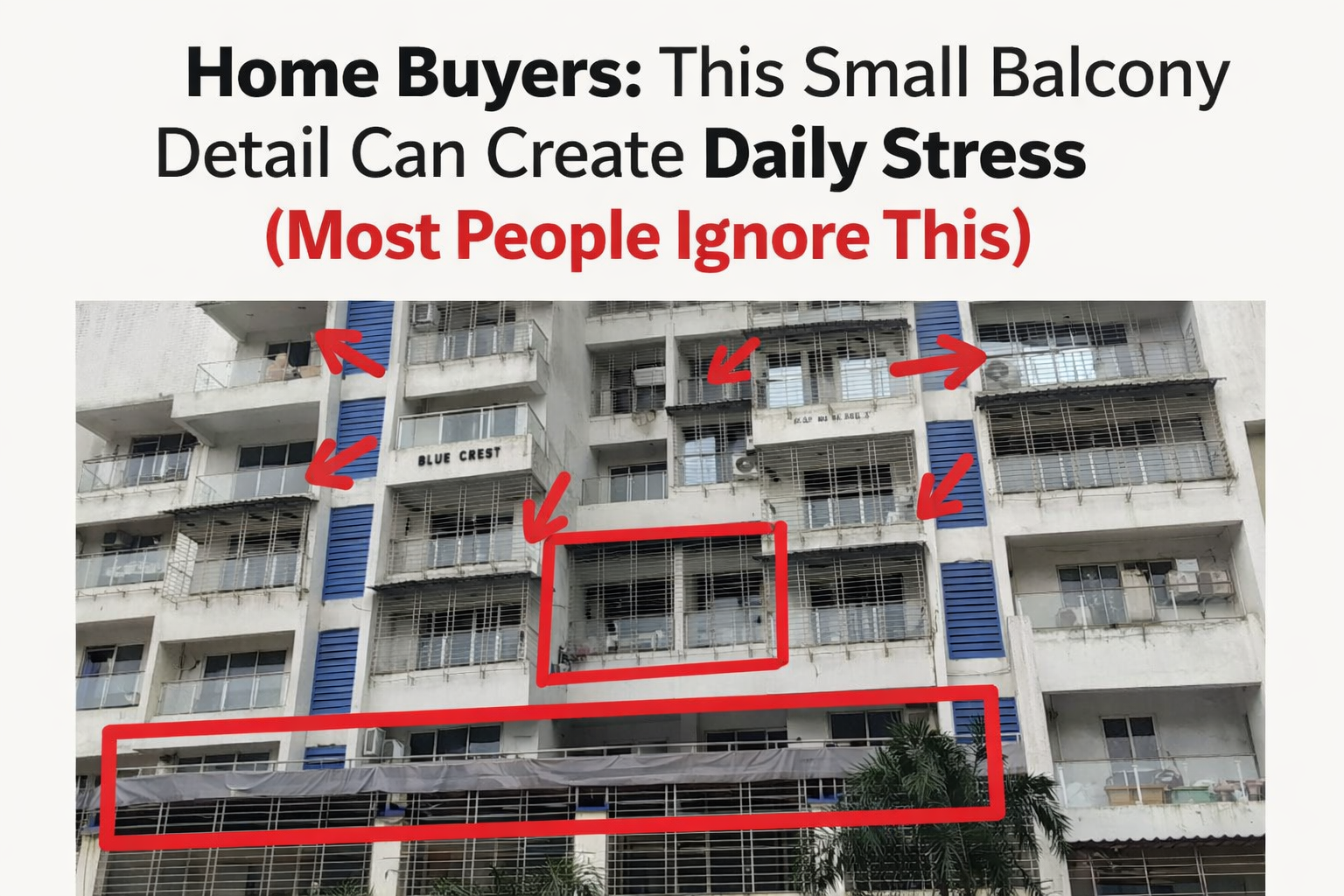
Look carefully at many residential buildings,look at above pic. You will notice residents covering balconies using metal sheets (patra). At first, it looks harmless, but this creates multiple long-term problems.
The Situation Most Buyers Face Later
Imagine you buy a 2nd floor flat. Later, the 1st floor owner covers their balcony as its visible in pic. The metal sheet extends outward and comes directly outside your window. Now, during rain, you face loud noise. During summer, there is heat reflection. During wind, there is vibration noise. Your view gets blocked. This becomes your daily disturbance, and it is something you never noticed while buying.
The Garbage Problem Nobody Talks About
Let us be realistic. In many buildings, people throw garbage from the balcony, kids throw wrappers or toys, and dust and debris accumulate. Rainwater also collects. All this accumulates on extended metal sheets. The flat owner below is the one who faces this. Imagine garbage outside your window, bad smells, mosquito breeding, and a dirty environment. This becomes a daily frustration.What makes this worse is that there is no accountability. The person throwing garbage is not the one suffering. You are. And complaining to your neighbor about it creates social tension that you have to live with every single day. Many residents simply choose to suffer silently rather than deal with the conflict. But that silence comes at the cost of your health, your peace, and your comfort.
The Pigeon Problem
Another common issue is that pigeons sit on metal sheets. Droppings accumulate, cleaning becomes difficult, and a bad smell develops. When multiple residents cover balconies, this becomes worse.
Pigeons are not just a nuisance they carry diseases, their droppings corrode surfaces over time, and the sound of flapping wings and cooing early in the morning is something no one wants as an alarm clock. Once they establish a resting spot, they return every single day. Getting rid of them permanently is very difficult, especially when the sheet belongs to your neighbor and you have no control over it.
You might think you will clean regularly, but here is the reality. When you clean, dirt falls down, dust spreads, and garbage drops below. Imagine a shop at the ground floor. The shop owner gets frustrated because dirt falls near the shop, customers get disturbed, dust enters the shop, and cleaning occurs during working hours. This creates arguments, complaints, disputes, and daily tension. Cleaning itself becomes a new problem.
The Society and Legal Angle
Most housing societies do not have clear rules about balcony modifications. Or if they do, enforcement is poor. Some residents get away with major structural changes while others are stopped for minor ones. This inconsistency creates frustration and inequality within the same building. You may have bought the flat expecting a well-maintained society, but what you get is a place where every resident does whatever they want with no consequences. Understanding the society’s rules and track record of enforcement before buying is something most people completely overlook.
The Resale Value Impact
Here is another angle that no real estate agent will ever tell you. A building where balconies are covered with mismatched metal sheets, where pigeons are everywhere, where garbage is visible, and where disputes are common that building loses its appeal very fast. When you eventually want to sell your flat, potential buyers will notice. They will either negotiate heavily or simply move on to another property. The modifications your neighbors made have now directly reduced the price you can command. Your investment has been silently devalued.
This is not a one-time issue. It becomes daily rain noise, garbage accumulation, pigeon droppings, cleaning disputes, and neighbor conflicts. This is very difficult to fix later.
Before buying a flat, ask yourself:
Can lower & upper floor residents cover there balcony? Will cleaning create issues? Is there a shop below? Are pigeons already present? Will future modifications affect me? These small questions can save years of frustration.
Special Warning for Under Construction Property Buyers
If you are buying an under construction flat, your risk is even higher. You are making a decision based on sample flats, floor plans, and the builder’s promises. You cannot see who your neighbors will be, what they will do with their balconies, or how the building will actually look after five years of occupation. Everything looks clean, fresh, and perfectly maintained during possession but give it two or three years and the reality sets in.
When buying under construction, always ask the builder whether the society bylaws include restrictions on external balcony modifications. Ask for it in writing. Check whether the building design has covered corridors, setbacks, or shop units on the ground floor that could create future friction. Visit other completed projects by the same builder and observe how residents have modified those buildings over time. That will give you the most honest preview of what your building will look like in the future.
Under construction buyers have one advantage that ready possession buyers do not time. Use that time wisely to ask the right questions before you sign.
Most buyers see a nice balcony, a good view, and extra space,amenities. But smart buyers think about future problems, neighbor behavior, and long-term practicality. Because buying a home is not a short-term decision it is a long-term lifestyle decision. This is shared for community awareness. If you have experienced similar issues, share your experience. It may help new home buyers avoid costly mistakes.
Don’t take chances with your biggest investment.
We provide professional inspection services & Pre-Purchase Evaluation to help you verify before you decide.