
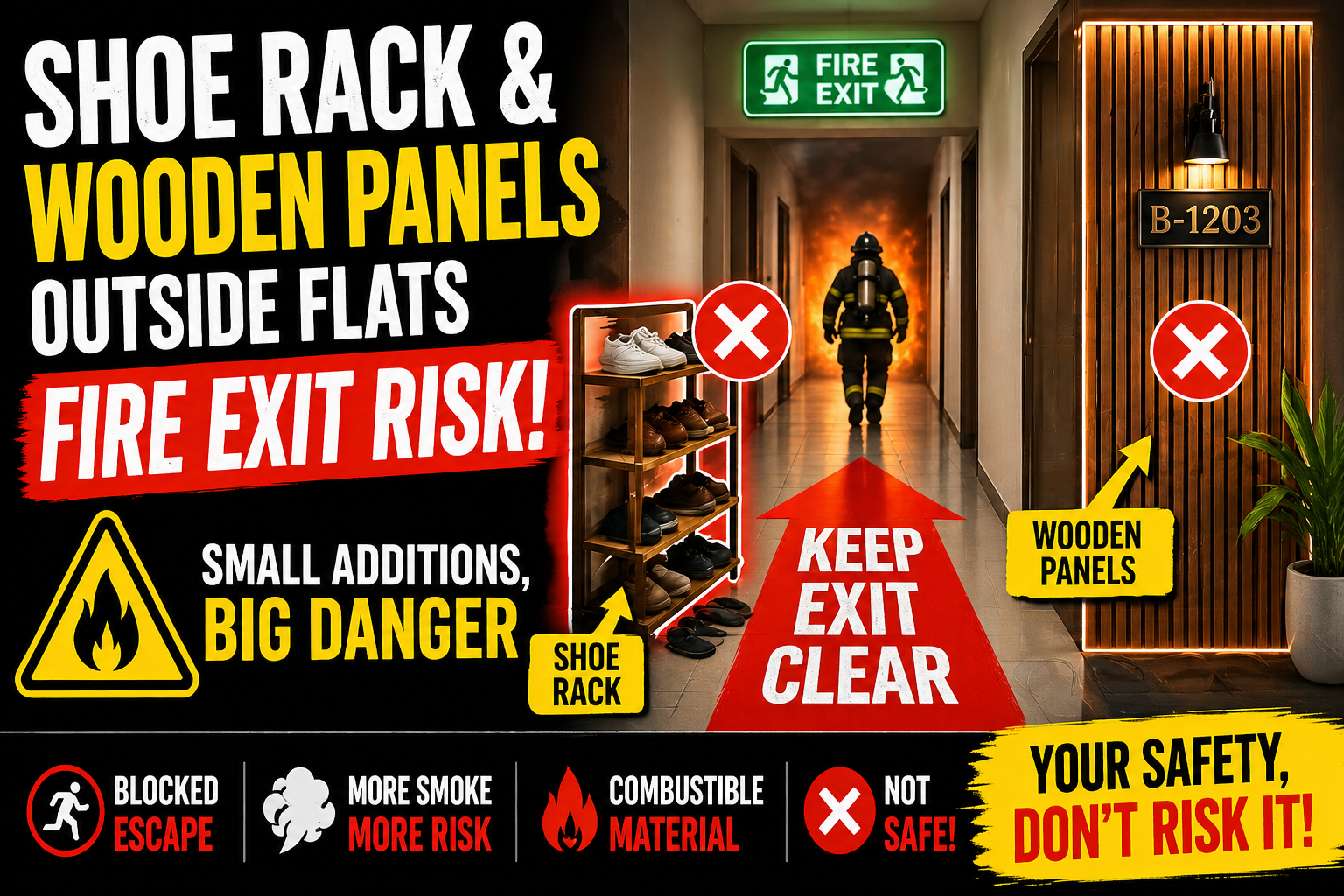
In modern Indian homes, especially apartments, space optimization is everything. From modular kitchens to wall-mounted storage, every corner is used smartly. One common addition you’ll often see outside flats or even inside corridors is a shoe rack. It looks harmless a neat way to keep footwear organized. But from a civil engineering and safety perspective, this small convenience can turn into a serious hazard, especially during a fire emergency.
The Problem: Blocked Fire Exit Paths
Fire exits are designed with one clear purpose safe and quick evacuation. According to guidelines under the National Building Code of India, exit pathways like corridors, staircases, and lobbies must remain completely free of obstructions. However, in reality, many residents place shoe racks, cabinets, plants, or even bicycles in common passages. This reduces the effective width of the escape route. During normal times, it may feel manageable but in an emergency, every second and every inch of space matters.
Key Questions Homebuyers Should Ask:
- Is the corridor width sufficient as per approved plans?
- Are common areas being encroached by residents?
- Does the society enforce fire safety rules strictly?
Most buyers ignore these aspects while purchasing a home, focusing only on interiors and aesthetics. But safety lies in these overlooked details.
The Real Risk During Fire Emergencies:During a fire incident, visibility drops due to smoke, panic levels rise, and people rush toward exits. In such conditions:
- A shoe rack can become a tripping obstacle
- Narrowed passages slow down evacuation
- Combustible materials (wood, rubber) can fuel the fire
Firefighters also depend on clear access routes. Blocked corridors can delay rescue operations, increasing the risk to life.
Additional Risk: Decorative Wooden Panels Outside Flats
While shoe racks are an obvious obstruction, another growing trend in apartments is decorative wooden paneling outside flat entrances. It may enhance aesthetics, but from a safety standpoint, it introduces a hidden risk that many residents and societies overlook.
Most of these panels are made from plywood, MDF, or laminate materials that are highly combustible. In the event of a fire, they can ignite quickly and allow flames to spread along corridor walls. Unlike concrete surfaces, these finishes act as fuel, increasing the fire load in what should be a protected escape route.
An even bigger concern is smoke generation. Burning laminates release dense, toxic smoke. In a fire emergency, visibility can drop within seconds, making evacuation extremely difficult. People may lose direction or inhale harmful gases before reaching safety. In many real-life cases, smoke not flames has caused more casualties.
There is also a compliance issue. As per the National Building Code of India, common corridors are designated as means of egress and should not include materials that increase fire risk. Decorative paneling often falls into a gray area or may directly violate safety norms if installed without approval.
Even slim panels can reduce corridor width or create projections. In panic situations or low visibility, these can lead to collisions and slow evacuation.
The core issue is perception. These panels are seen as premium upgrades, but they quietly compromise one of the most critical safety features of a building the escape path. Just because a society allows such modifications does not mean they are safe.
Even if builders design proper fire exits, problems often start after possession:
- Residents prioritize convenience over safety
- Society committees hesitate to enforce strict rules
- Lack of awareness about fire safety norms
This creates a “soft violation” culture where small encroachments gradually become accepted.
To ensure safety without compromising convenience:
- Keep all common passages completely clear
- Avoid adding combustible materials in corridors
- Use compact storage solutions inside the flat
- Conduct regular society safety audits
- Display clear “no obstruction” signage
- Educate residents through meetings and notices
A shoe rack or decorative panel may seem like a minor addition, but in the context of fire safety, it can become a life-threatening obstacle. When evaluating a property or even living in one look beyond interiors and focus on shared spaces. Because in an emergency, it’s not your home design that saves lives it’s the clear, unobstructed path to safety.
Most homebuyers focus on interiors, but real safety lies in what you don’t see or don’t question.
At Concrete Truths, we break down hidden risks in buildings using real civil engineering insights so you can make smarter, safer decisions before investing your hard-earned money.
👉 Want a deeper evaluation of your property?
Explore our expert services here:
https://concretetruths.com/services/
Because when it comes to your home…
it’s not just about how it looks it’s about how safe it really is.
Don’t take chances with your biggest investment.
We provide professional inspection services & Pre-Purchase Evaluation to help you verify before you decide.